- en

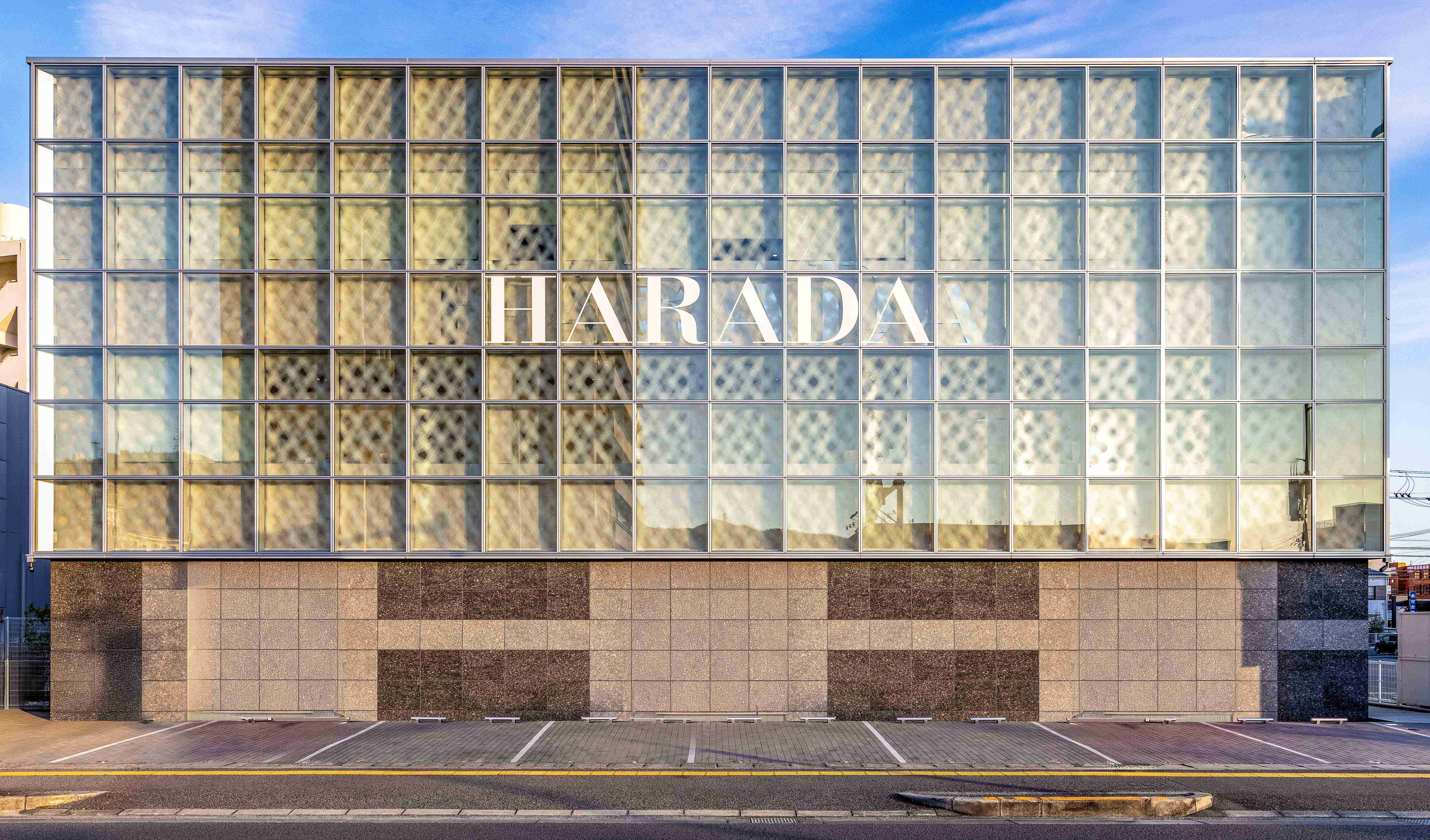
In the heart of Tokushima, a city shaped by water and layered cultural influences, the jewelry/watch HARADA Store designed by Kimihiko Matsuda emerges as a sophisticated architectural device, where space, material, and light work together to create a carefully calibrated perceptual experience. More than a simple retail space, the building presents itself as a controlled environment, a spatial system capable of staging the object without ever overpowering it.
The architecture withdraws, reduces, and becomes rarefied. Yet this apparent simplicity is never neutral in a passive sense: it is an intentional neutrality, precisely constructed, an active tool in shaping the experience. In this project, space shifts from protagonist to resonant field; rather than competing with the jewelry or watches, it amplifies their presence, enhancing their materiality, light, and symbolic value.
Matsuda’s language is rooted in contemporary Japanese minimalism, yet it departs from it in a key way: it goes beyond aesthetic minimalism, pursuing an operational and perceptual approach.
Every element is calibrated to reduce visual noise and create an environment where attention can focus on the essential. Surfaces are continuous, materials are limited, and geometries are rigorous. The removal of decorative hierarchies does not result in emptiness, but rather in a suspended condition, a spatial quality that invites slower, more conscious perception.
In this sense, the store becomes an “airy and luminous” environment, where lightness is expressed as both a physical and mental dimension. The space is open yet never dispersive, fluid yet always controlled. Every design choice contributes to a perceptual continuity that guides visitors without imposing a rigid path.
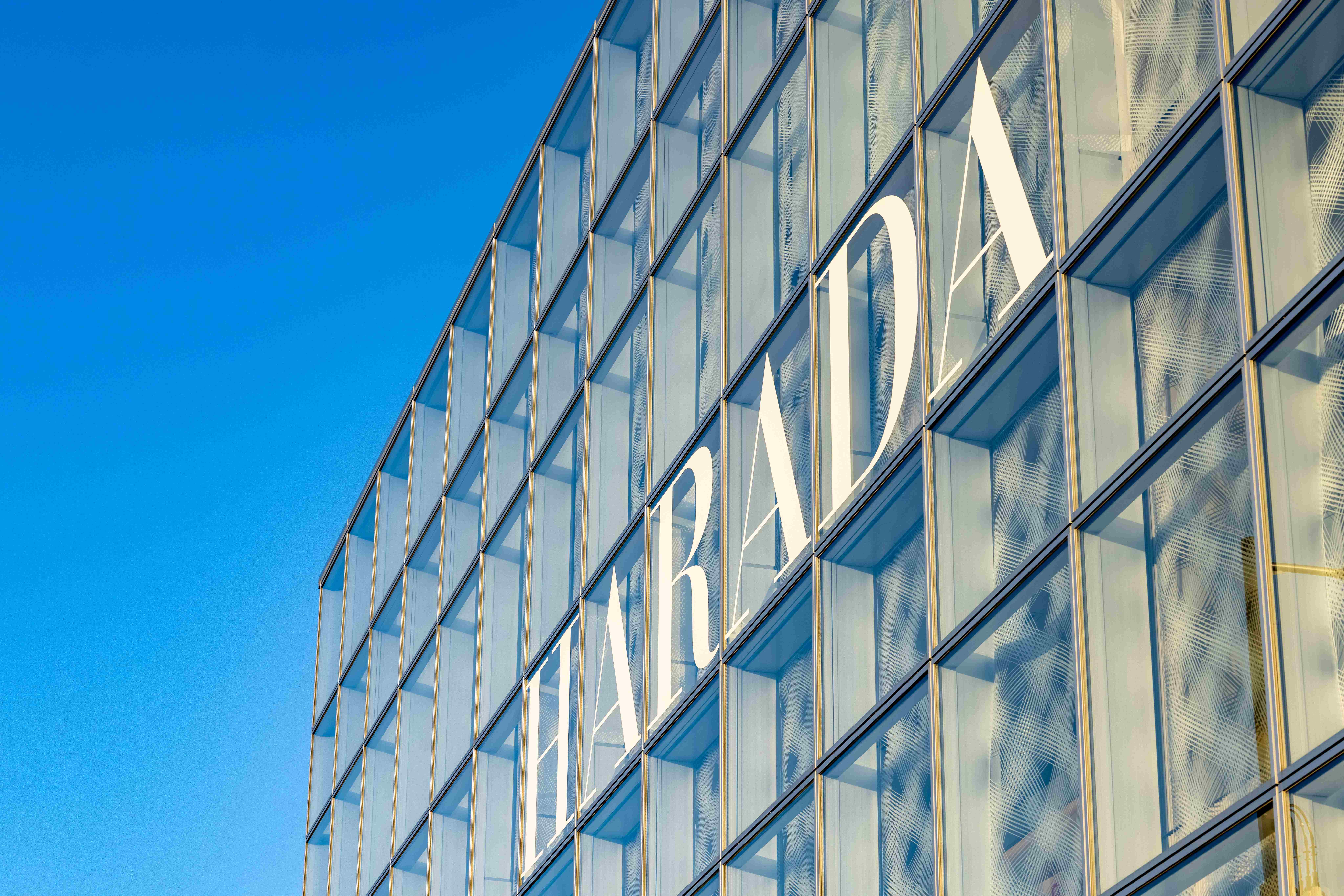
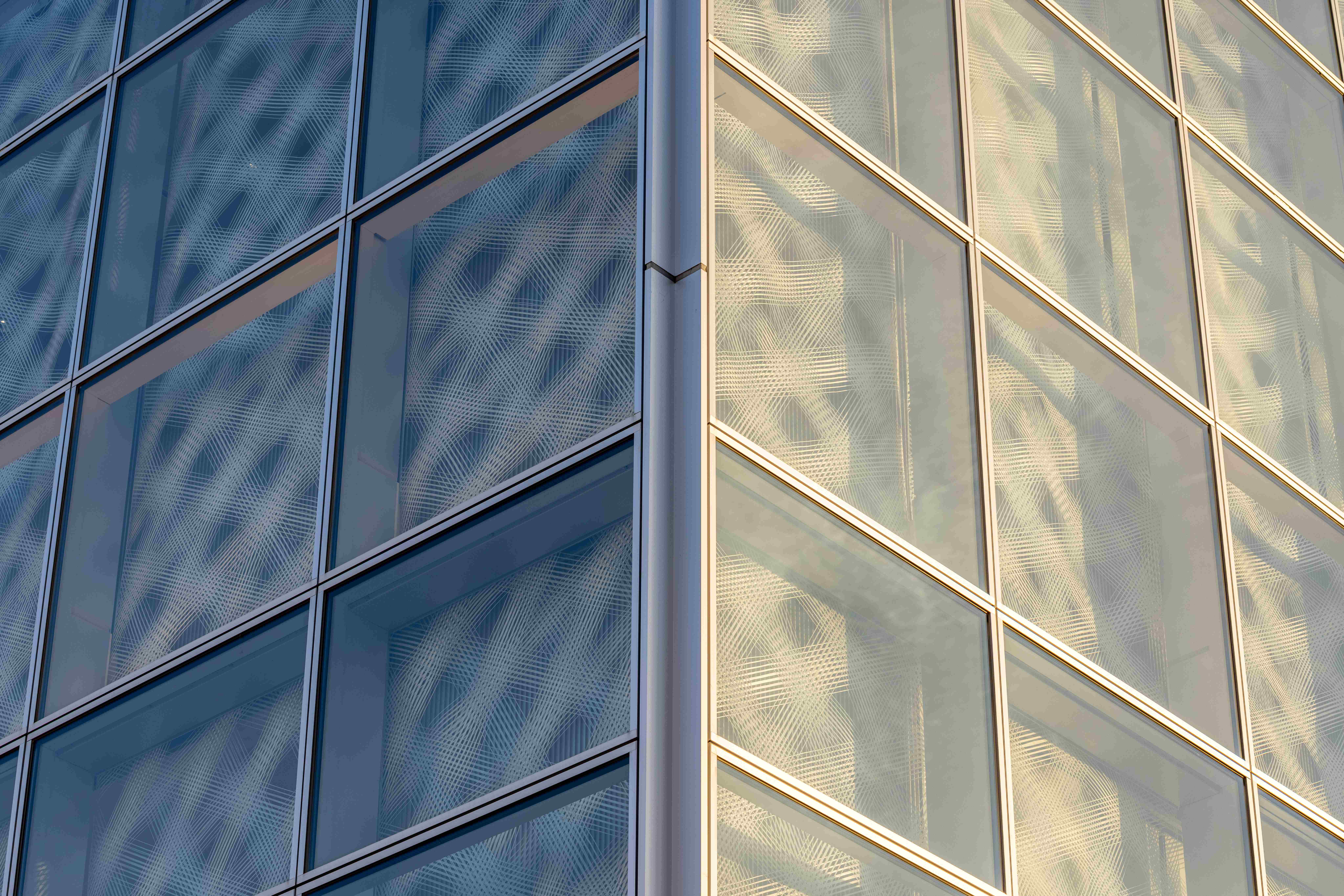
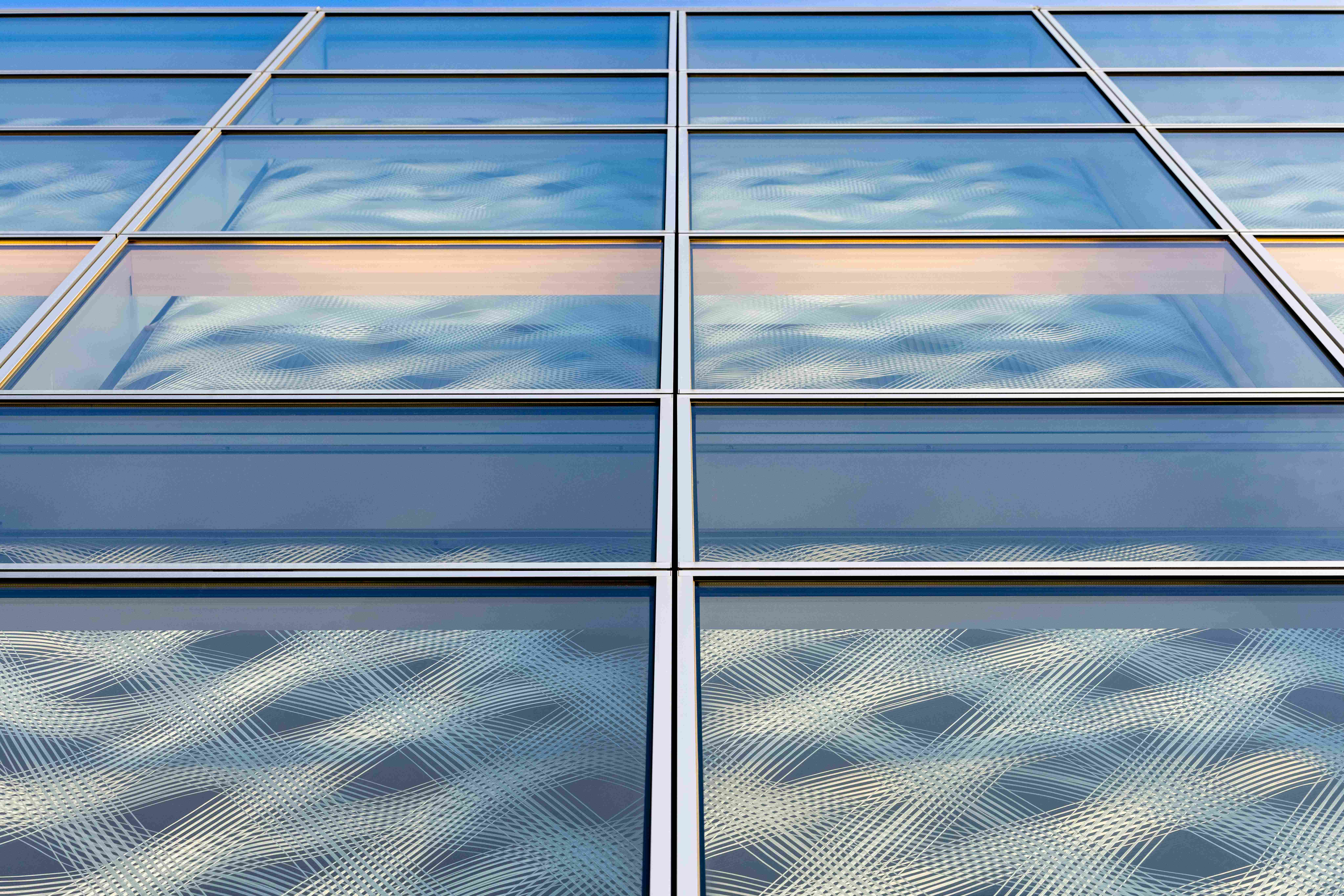
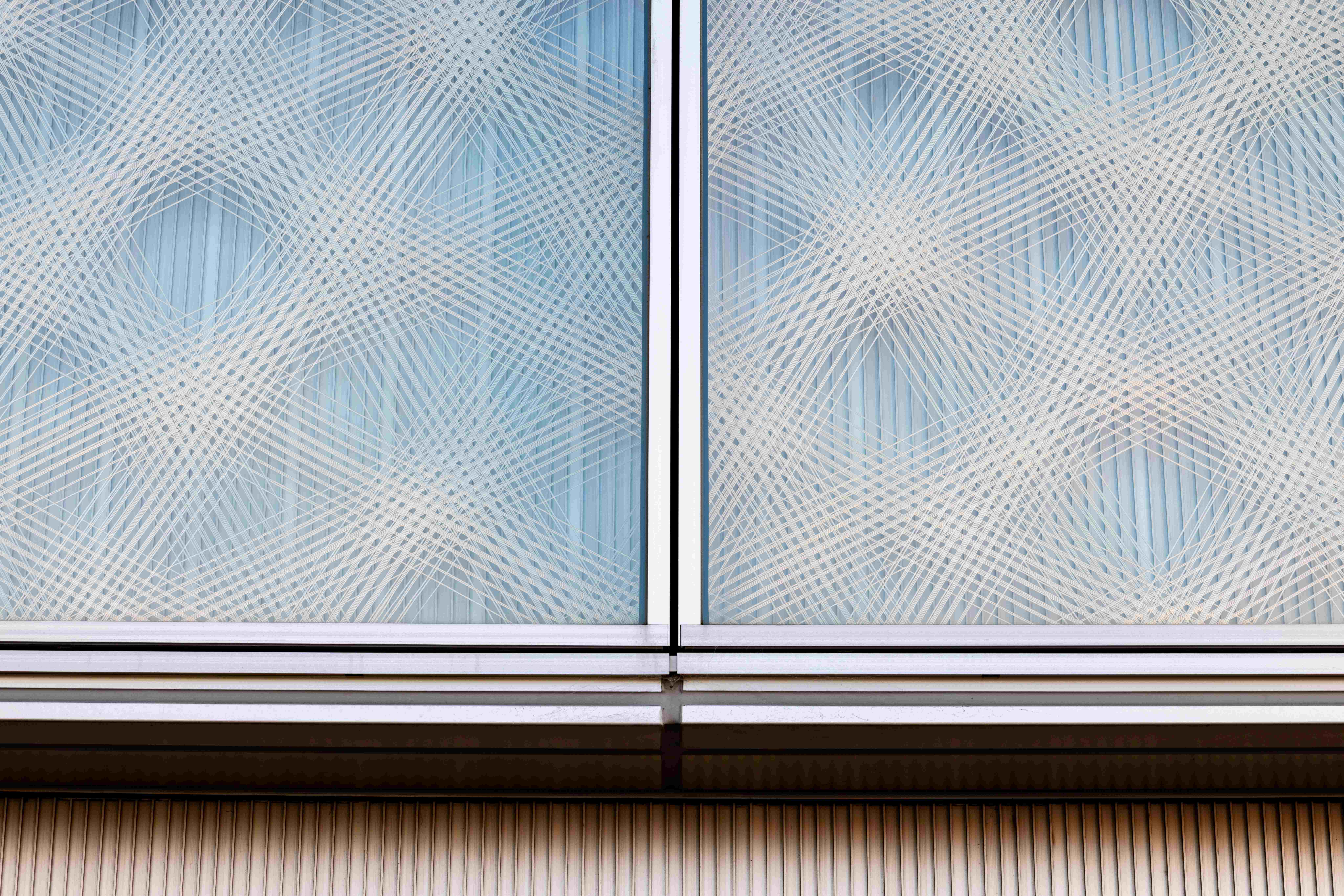
The façade is one of the project’s most significant elements. Clad in a custom i-Mesh solution, it acts as a vibrant membrane, a filter mediating the relationship between interior and exterior.
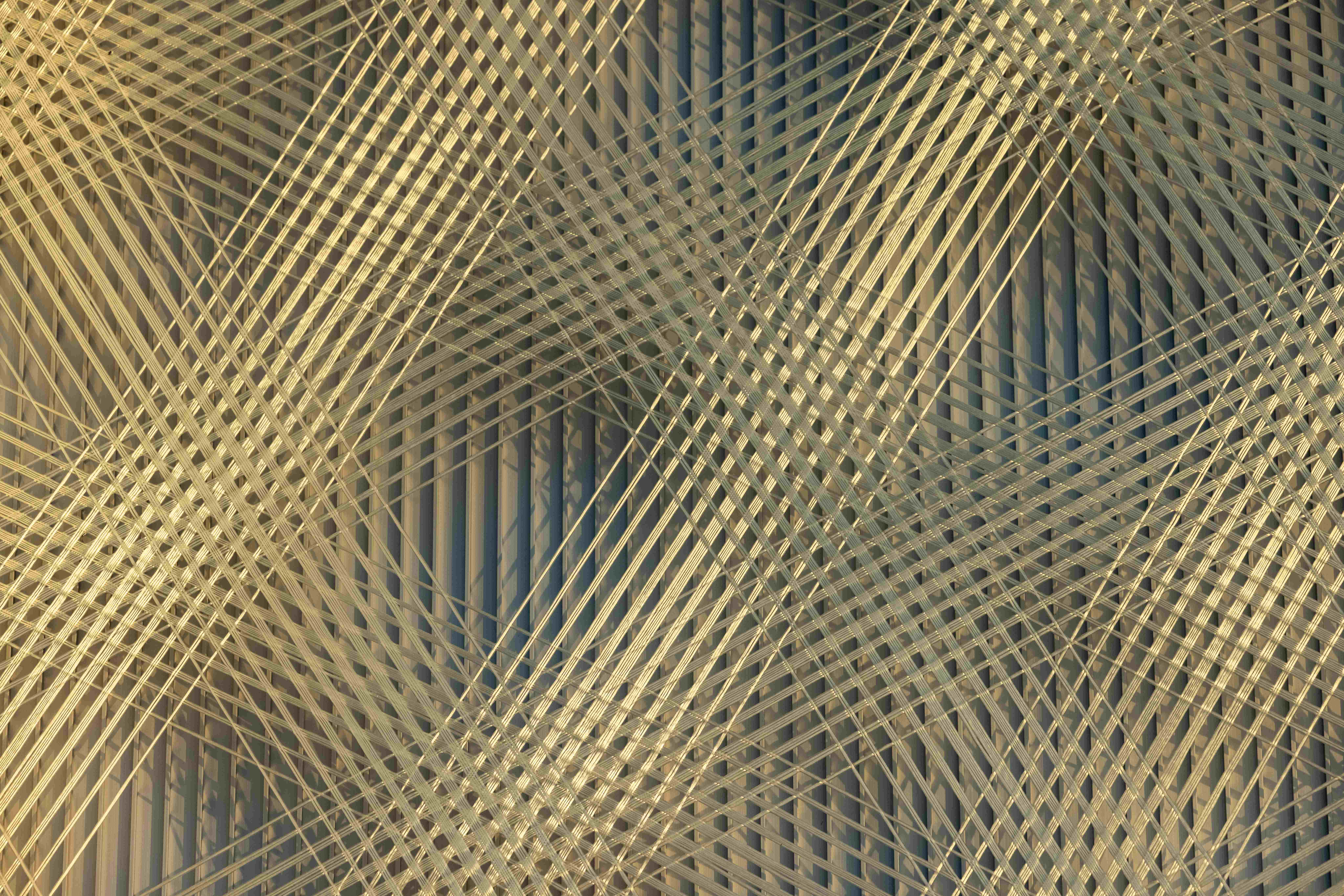
The pattern, specifically developed for this intervention, introduces a kinetic dimension to the glazed surface. Intersecting and overlapping lines generate a texture that, while regular, conveys a sense of continuous movement. It is a surface that changes with light, viewpoint, and time.
During the day, the system functions as a shading device, filtering natural light and ensuring precise control of interior illumination. The fiberglass, with its ability to capture and diffuse light, helps create a soft, never glaring atmosphere. In the evening, the building transforms into an urban lantern: interior light passes through the mesh and diffuses into the surrounding space, producing a vibrant, almost immaterial image.
The façade thus becomes an active threshold, a transitional element that not only separates but connects inside and outside through a continuous interplay of reflections, transparency, and depth.
At the core of the building lies the atrium, a vertical space crossed by suspended staircases that visually and physically connect the store’s different levels. Here, i-Mesh plays a central role, not only as a functional element but as a true spatial device.
Used as a partition around the staircase, the textile does not fully enclose or divide; instead, it creates a porous separation, an internal threshold that maintains visual continuity. The Wien Straw pattern, a contemporary reinterpretation of an iconic motif, introduces depth and layering, enriching spatial perception.
The textile surface generates a vibrating effect, enhanced by grazing light that glides across the mesh, revealing its texture. The material reacts to light reflecting, absorbing, and diffusing it in constantly changing ways. In this dialogue between light and matter, the space takes on an almost immaterial quality, as if in continuous transformation.
The atrium becomes a space of connection and wonder, an active void that organizes the entire building and defines its identity.
One of the most relevant aspects of the project is the complete integration between architecture and display system. There is no clear distinction between container and content: the display is part of the space, and the space is built around the object.
This continuity results in a reduction of superfluous elements and a strong focus on detail. Surfaces become neutral supports, while display cases emerge as light, almost suspended presences. Each object is isolated, enhanced, and made the protagonist through careful control of light and context.
Light, in particular, plays a fundamental role. It is not merely functional, but a true design material. The combination of diffuse lighting and focused accents creates a subtle perceptual hierarchy, guiding the gaze without forcing it.
The jewelry/watch HARADA Store fully embodies contemporary Japanese retail culture, where the store is conceived as a total, sensory, and narrative experience.
Entering the store means crossing a threshold, leaving behind the rhythm of the city and immersing oneself in a controlled, almost rarefied environment. Time seems to slow down, space expands, and attention focuses on details.
In this context, luxury is not about ostentation, but precision. It lies in the quality of light, the choice of materials, and the care in proportions. i-Mesh becomes the ideal material for this philosophy of quiet luxury: lightweight, modular, and transparent, it enhances light and space without ever dominating them. It is a discreet form of luxury, expressed through harmony and balance.
Architecture thus becomes a mediating tool between object and visitor, a device that creates value through perception. Rather than imposing an image, it establishes the conditions for experience to emerge naturally.
Kimihiko Matsuda’s project for the HARADA Store represents a refined synthesis of matter, light, and time. The use of i-Mesh is not merely an aesthetic or technological choice, but an integral part of a broader design strategy aimed at creating a space capable of evolving, reacting, and engaging with those who experience it.
In this building, every element contributes to a delicate balance between presence and absence, visible and invisible. The space is discreet yet never anonymous, minimal yet intensely expressive.
It is within this tension that the project’s strength lies, in its ability to transform architecture into an amplifier of experience, a silent yet essential support for the staging of the object.
A place where beauty is not declared, but revealed. And it is here that i-Mesh expresses itself with coherence and subtlety.
Contact us about retail solutions