- en


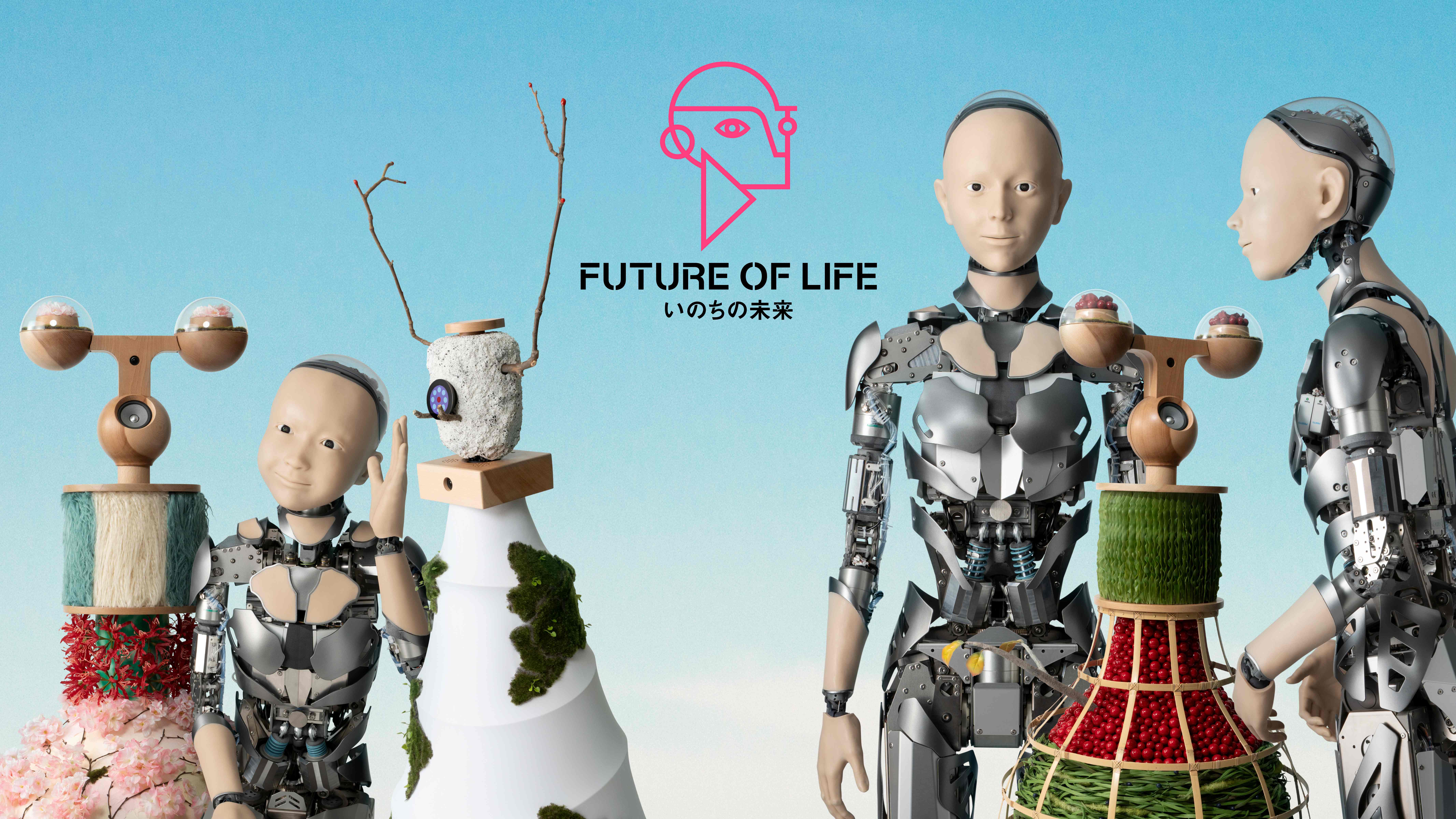
The Future of Life Pavilion is one of the eight Signature Pavilions of Expo 2025 Osaka, yet more than a pavilion, it feels like an organism.
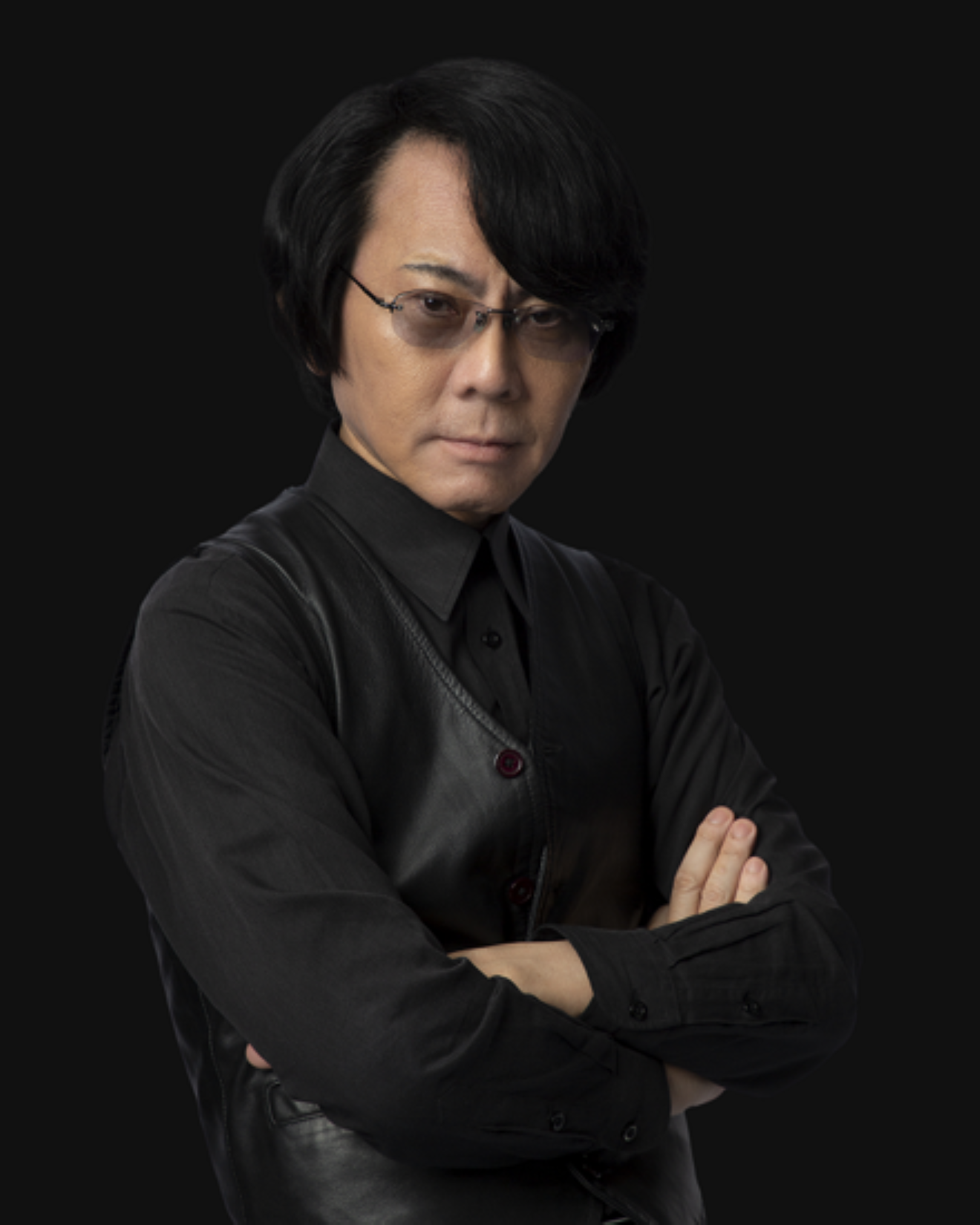
It is conceived by Hiroshi Ishiguro, a leading figure in contemporary robotics, with architectural contributions by Jiro Endo.
From the outside, the project immediately takes a position. Dark surfaces are crossed by a continuous veil of water flowing along the entire structure.
This is not a scenographic detail. It is the project.
Water destabilizes the boundary, transforming it into something alive. The i-Mesh architectural mesh cladding follows this movement. It is a lightweight membrane that reacts to light, shifts with perspective, and never settles into a single image.
You are faced with a surface that is never still.
And the question emerges immediately: how stable is the boundary between natural and artificial today?
The internal path unfolds as a sequence of transitions through immersive environments, controlled light, and presences that are not immediately recognizable.
It begins with a condition in which objects and presences are not clearly separated.
In Japanese culture, influenced by Shintoism, even what is not human can be inhabited by a form of presence, the kami. This is not consciousness in the Western sense, but a less rigid boundary between what is alive and what is not.
From here, the path develops toward a future scenario: 2075, where humanoid robots and androids are not a rupture, but a coherent evolution of this relationship.
There is no abrupt shift, but continuity.
Moving through the space, it becomes clear that the question is no longer whether these technologies will enter our lives, but how they are already reshaping the way we inhabit space.
At this point, the body is no longer a fixed condition. It becomes something that can be mediated, extended, duplicated.
And this inevitably transforms the way we design space.
This is where Hiroshi Ishiguro’s thinking becomes clear. It is not explained in the pavilion, it is perceived.
If the human brain is a continuous and ever-active process, it cannot be reduced to transferable data. We can store information and memories, but they represent only a small part of its activity.
What cannot be transferred is the process itself.
And above all, it cannot be separated from the body. The brain learns through bodily experience. Changing the body means changing consciousness.
From this perspective, the idea of artificial consciousness or digital immortality becomes less absolute. A system can simulate, but it cannot live an experience in the human sense.
The pavilion makes this position tangible. The body becomes variable, but precisely for this reason, its centrality becomes evident.
For those who design, the question becomes unavoidable: are we designing for human beings, or for something that will no longer be entirely human?

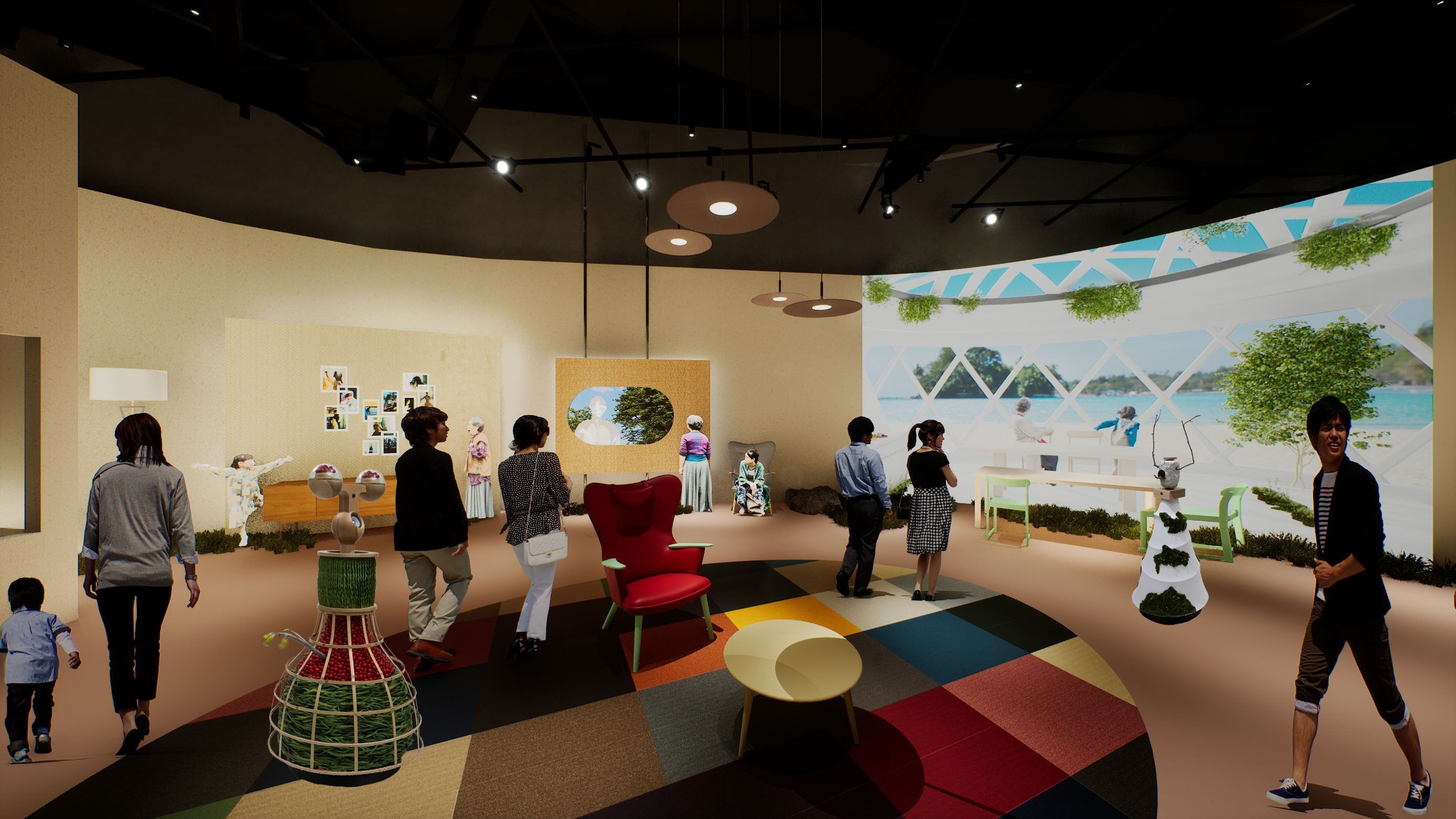

One of the most compelling moments is linked to avatars.
The pavilion introduces a different form of presence, not necessarily embodied, but mediated. Through avatars and robots, presence can be delegated, extended, displaced.
At a certain point, the experience of space no longer coincides with the physical body.
It is more than a technology. It is a perceptual shift.
Being present may also mean not being entirely there, or being present in a distributed way.
And here Ishiguro’s perspective returns as central: if the body changes, perception, learning, and existence change as well.
At this point, an external perspective helps to clarify the implications.
Yuval Noah Harari, historian and contemporary thinker, observes the same scenario from a different angle. He does not focus on what consciousness is, but on what happens when advanced technologies enter society.
This contrast has also emerged in public discussions such as the Asahi World Forum 2022, where different positions were compared without seeking a definitive synthesis.
Even without true artificial consciousness, these systems can accumulate power, redefine balances, and generate new inequalities.
If Ishiguro explores the limits of the human, Harari highlights the collective consequences.
For those who design, this means engaging not only with what is possible, but with what is responsible.
Technology is not neutral.
The distinction between good and bad is not universal, but socially and historically constructed. If design incorporates superficial or distorted visions, the risk is concrete.
In the final part of the path, time seems to expand. Forms become less recognizable.
It is no longer about imagining the future, but about stepping outside the categories through which we read the present.
The future is no longer distant. It is already taking shape.
And the question becomes inevitable: who is shaping it?
The Future of Life Pavilion does not provide answers. This is precisely its value. It creates a condition in which questions become unavoidable.
Designing today means moving within this tension, between the exploration of technological possibilities and the awareness of their consequences.
If technological development cannot be stopped, then the role of those who guide it becomes central. Education, critical thinking, and responsibility become part of the design process itself.
The future is not something that will arrive. It is something that takes form through the conditions we build.
Every project contributes to defining it.
Even when it involves a surface, a material, or a detail that seems invisible.
Discover how i-Mesh is redefining architectural surfaces through light, perception, and innovation.
Explore our projects and applications in contemporary architecture.