


- en

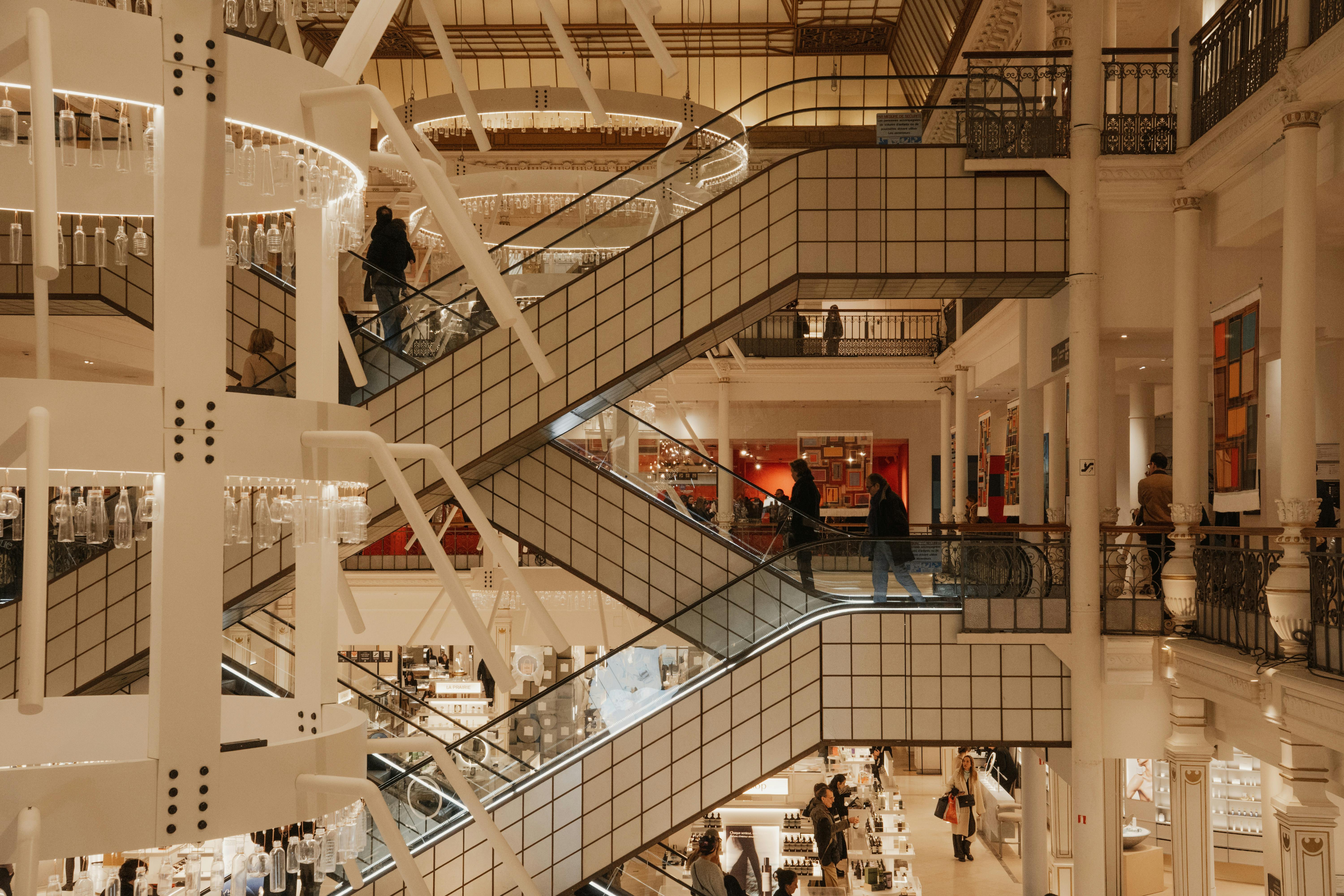
In contemporary luxury retail design, architecture is undergoing a profound transformation. Luxury stores are no longer theatrical environments designed to impress through excess, but carefully calibrated spaces built to enhance the product through light, materials, and perception.
Space no longer seeks attention for itself. Instead, it directs attention, controls it, and constructs a more conscious experience of both product and retail environment.
This shift is particularly evident in Japanese retail architecture, where the store is not simply a place of sale, but a spatial device designed to shape the visitor’s experience. Here, luxury rarely coincides with ostentation. Rather, it emerges through the quality of the relationship between object, material, and atmosphere.
In many contemporary projects, minimalism is no longer merely an aesthetic language, but a perceptual strategy. Space is emptied in order to intensify the presence of the object. Design complexity hides behind apparently simple surfaces. Architecture stops imposing itself and becomes an invisible system of control.
This evolution reflects a broader transformation in the culture of contemporary luxury. In a context saturated with images, communication, and visual stimuli, value no longer lies in accumulation, but in the ability to create attention.
To understand minimalism in contemporary retail, it is useful to observe how retail architecture has evolved over time. Long before becoming a commercial environment, the store functioned as a cultural instrument capable of representing the relationship between consumption, the city, and modernity.
In the nineteenth century, with the emergence of European department stores, retail entered the dimension of collective experience for the first time. Projects such as Le Bon Marché and La Samaritaine in Paris, or Galleria Vittorio Emanuele II in Milan, transformed shopping into an immersive urban experience.
Large iron-and-glass structures, monumental domes, theatrical staircases, and covered galleries introduced a new idea of commercial space: no longer a simple place of transaction, but an environment designed to amaze.
Architecture becames spectacle. The consumer entered a world constructed around desire.
One of the most emblematic examples is Le Bon Marché, often considered the first modern department store. Aristide Boucicaut quickly understood that retail was not only about selling products, but about constructing a social experience. For this reason, he also involved Gustave Eiffel in the design of the internal metal structures, introducing open, luminous, and continuous spaces that revolutionized the experience of commerce.
For the first time, customers could move freely within the space, observe, linger, and explore. Goods were displayed as objects of desire rather than simply stored behind counters or closed vitrines.
A new relationship emerged between architecture, perception, and consumption.
La Samaritaine, designed by Frantz Jourdain in the early twentieth century, also represents a key moment in the evolution of commercial architecture. Its Art Nouveau façade, large glazed openings, and decorative use of metal structures transformed the store into an urban manifesto of Parisian modernity.
During the same years, Italian commercial galleries such as Galleria Vittorio Emanuele II introduced yet another dimension: retail as public urban space. Here, commerce intertwined with strolling, social interaction, and the bourgeois representation of the modern city.
Shop windows became theatrical devices, monumental staircases guided bodily movement, while artificial lighting, still relatively new in European cities, amplified the spectacular dimension of exhibition space.
Retail became a visual machine.
In the second half of the twentieth century, with postwar economic growth and American suburban expansion, a new typology emerged: the shopping mall.
Architects and urban planners such as Victor Gruen initially imagined malls as new urban centers, climate-controlled microcities capable of concentrating commerce, entertainment, and social life within a single environment.
Southdale Center, inaugurated in 1956, was one of the first fully enclosed and climate-controlled shopping centers.
The goal was no longer simply to sell products. It was to retain visitors within a continuous experience.
Over time, however, the commercial dimension prevailed over the urban one. Controlled circulation paths, absence of temporal references, constant artificial lighting, and overlapping advertising messages transformed retail into an increasingly immersive and saturated environment.
Retail became a perceptual machine.

In the 1980s and 1990s, with the globalization of luxury brands, another crucial phase emerged in luxury retail design: the era of the contemporary flagship store.
The store ceased to be merely a commercial space and became a physical extension of brand identity.
This gave rise to the season of brand architecture, in which global luxury brands began collaborating with internationally renowned architects to create iconic and highly recognizable spaces.
One of the most influential projects was the Prada Epicenter, designed by Rem Koolhaas and OMA in 2001. Here, retail was reinterpreted as a cultural and urban experience: interactive technology, multimedia installations, and a monumental central staircase transformed the store into a hybrid space between boutique, event venue, and architectural installation.
During the same years, Herzog & de Meuron developed boutiques for Prada and Miu Miu characterized by sophisticated material surfaces and highly expressive façades, while Peter Marino designed immersive environments for Chanel, Dior, and Louis Vuitton where architecture, contemporary art, and interior design became part of the brand narrative.
In this phase, retail arguably reached its highest level of architectural expressiveness.
Yet it was precisely this visual intensification that would eventually trigger a new design reaction.
This progressive transformation of contemporary retail increasingly brought the store closer to the museum space. It is no coincidence that many architects and designers began treating retail as a curatorial environment constructed around the perception of the object rather than simple sales.
Frank Lloyd Wright had already understood how commercial and exhibition architecture shared the same responsibility: guiding the gaze, constructing paths, and creating relationships between body, space, and object. After all, both museum and store are exhibition devices. Both organize attention, movement, and perception.
In contemporary luxury retail, this proximity has become increasingly evident. The object is isolated, illuminated, and distanced. Space slows the visitor down and constructs an almost contemplative experience. In some cases, entering a contemporary boutique means stepping into an environment closer to an art gallery than a traditional retail space.
This is not merely an aesthetic transformation. It is a transformation in the very role of retail architecture.
The store does not simply display products. It constructs meaning around their presence.
When everything communicates, nothing truly stands out.
It is from this awareness that a new direction in contemporary retail architecture emerges. After years of spectacle-driven design, luxury retail is moving toward quieter, more controlled, and more essential spaces.
Architecture stops competing with the product and begins creating the conditions for its perception.
This transformation is particularly evident in contemporary Japanese retail, where minimalism is interpreted not as simple formal reduction, but as a spatial and perceptual strategy.
Cultural concepts such as “ma” (the meaningful interval between elements) deeply influence the design of stores and exhibition spaces.
Empty space is not absence. It is an instrument of attention.
Architects such as Tadao Ando have developed a poetic based on the relationship between light, material, and silence. In his retail projects for Armani or Omotesando Hills, concrete, natural light, and spatial continuity are used to slow perception and create contemplative environments.
Similarly, SANAA, founded by Kazuyo Sejima and Ryue Nishizawa, has long explored nearly immaterial architectures in which transparency, reflection, and lightness dissolve the traditional boundaries of commercial space.


In this context, contemporary minimalism does not coincide with simplicity.
It is a sophisticated form of control over exhibition space.
Every surface, material, and lighting condition is calibrated to reduce visual noise and construct perceptual continuity.
The visitor is not overwhelmed by information. They are guided.
Many contemporary luxury brands are adopting this approach. Celine boutiques designed by Valerio Olgiati use essential geometries and mineral materials to create almost abstract environments. Apple Store spaces designed by Foster + Partners reduce architectural language to continuous surfaces, natural light, and nearly invisible details, transforming the store into an experiential space closer to a gallery than a commercial environment.
The role of materials is also changing profoundly. Lightweight, filtering, or semi-transparent surfaces become tools for modulating light, depth, and perception.
In contemporary retail design, i-Mesh introduces new possibilities and a new approach by combining lightweight architecture and perceptual performance within a single technical system. It does not function merely as decorative cladding, but as an atmospheric device capable of controlling transparency, reflections, and the visual relationship between city and interior.
This approach is evident in projects such as the Tod's Building by Toyo Ito, where the structural façade inspired by tree branches transforms the building into a porous and dynamic system. Or in the Louis Vuitton Ginza Namiki boutique designed by Jun Aoki, in which the building skin behaves like a liquid surface continuously reflecting urban light.
In contemporary retail, luxury no longer passes through ostentation, but through precision, control, and perceptual quality.
Space does not impose an image.
It constructs a condition.
This approach finds a concrete synthesis in the HARADA Store project designed by Kimihiko Matsuda.
Here, architecture never imposes itself as an iconic gesture but instead operates as a controlled system capable of enhancing jewelry and watches through light, material, and perception.
The filtering façade creates a visual threshold between city and interior, modulating transparency and depth without ever completely closing the space. The use of architectural mesh establishes a dynamic relationship with natural light, contributing to a controlled and silent atmosphere.
Inside, reduced materiality and continuous surfaces eliminate visual noise. Space does not attempt to dominate the product, but to make it perceptible.
In this sense, architecture functions as an amplifier.
It does not add.
It clarifies.
See how HARADA project represents an increasingly present direction in contemporary retail: creating environments where technological and architectural sophistication translates into a feeling of simplicity and naturalness.
The mesh you see in the HARADA Store is a bespoke i-Mesh pattern. Designed specifically for this project to balance transparency, light, and material presence → Discover the pattern
In contemporary retail, filtering materials are playing an increasingly central role because they make it possible to overcome the traditional opposition between openness and closure, exposure and privacy.
Lightweight façades, semi-transparent surfaces, and architectural mesh systems introduce a new perceptual depth in which the boundary between city and commercial space becomes more fluid and dynamic.
This is not simply an aesthetic or technological choice.
These materials transform the way visitors perceive light, movement, and their relationship with the product. By filtering visibility and controlling reflections, architecture creates environments that are more atmospheric, quieter, and more immersive, spaces capable of slowing experience and intensifying perceptual quality.
At a time when luxury increasingly seeks discretion and precision rather than spectacle, filtering materials become strategic design tools: they do not simply define space but calibrate its visual and emotional intensity.
The material that filters, defines, and transforms. Discover the i-Mesh product range.
Designing luxury retail today increasingly means designing silence.
Not as absence, but as an active condition. A space in which the object can emerge without being forced. An environment where experience is not imposed but made possible.
In a landscape dominated by images, speed, and overstimulation, this represents a precise architectural stance.
Contemporary minimalism does not eliminate complexity. It conceals it.
And perhaps it is precisely within this controlled subtraction that luxury retail is finding a new direction: more precise, more conscious, and more enduring.
Do you want to design silence?
If you are working on a retail space that seeks precision, atmosphere, and perceptual control, i-Mesh can be your instrument.
