- en

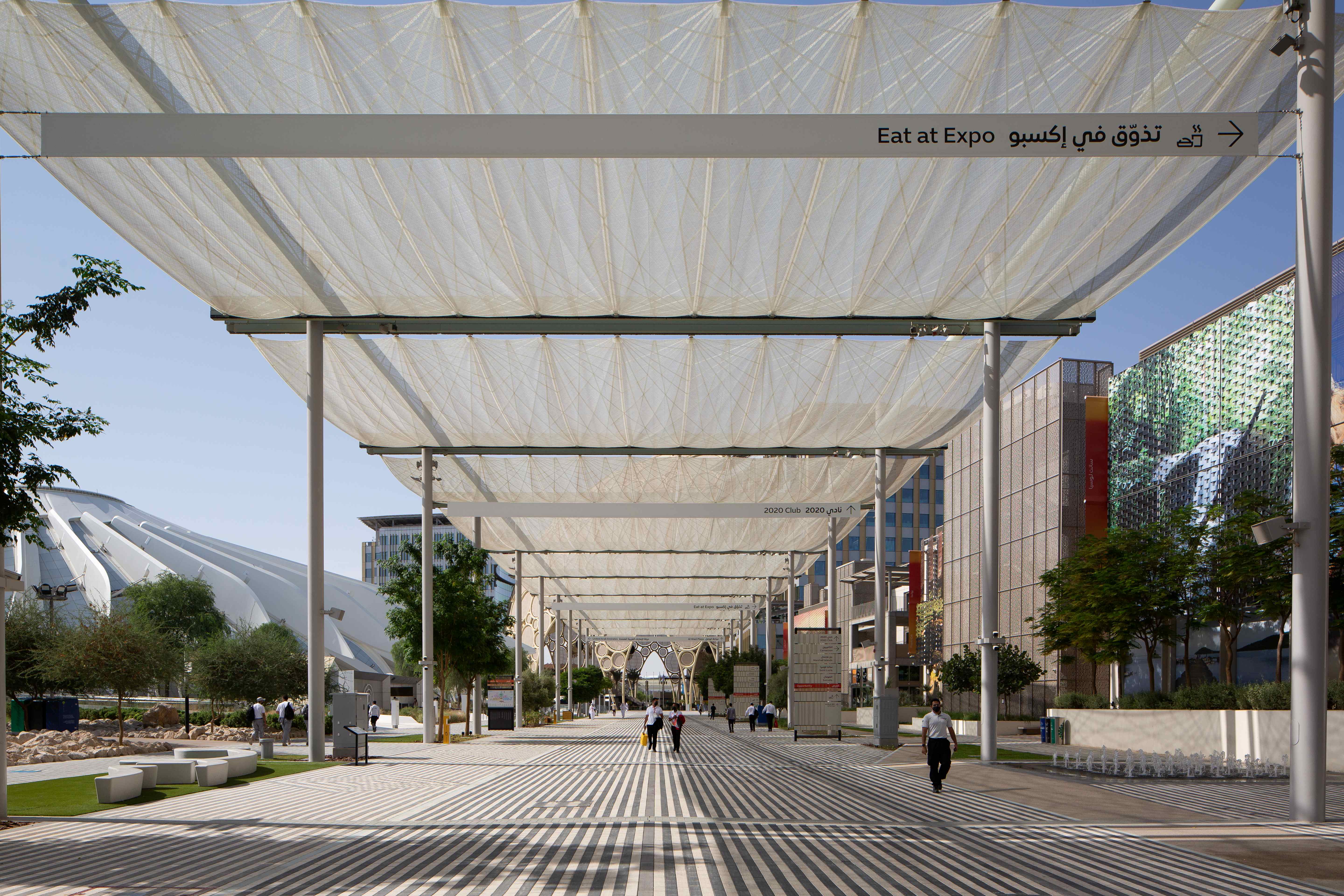
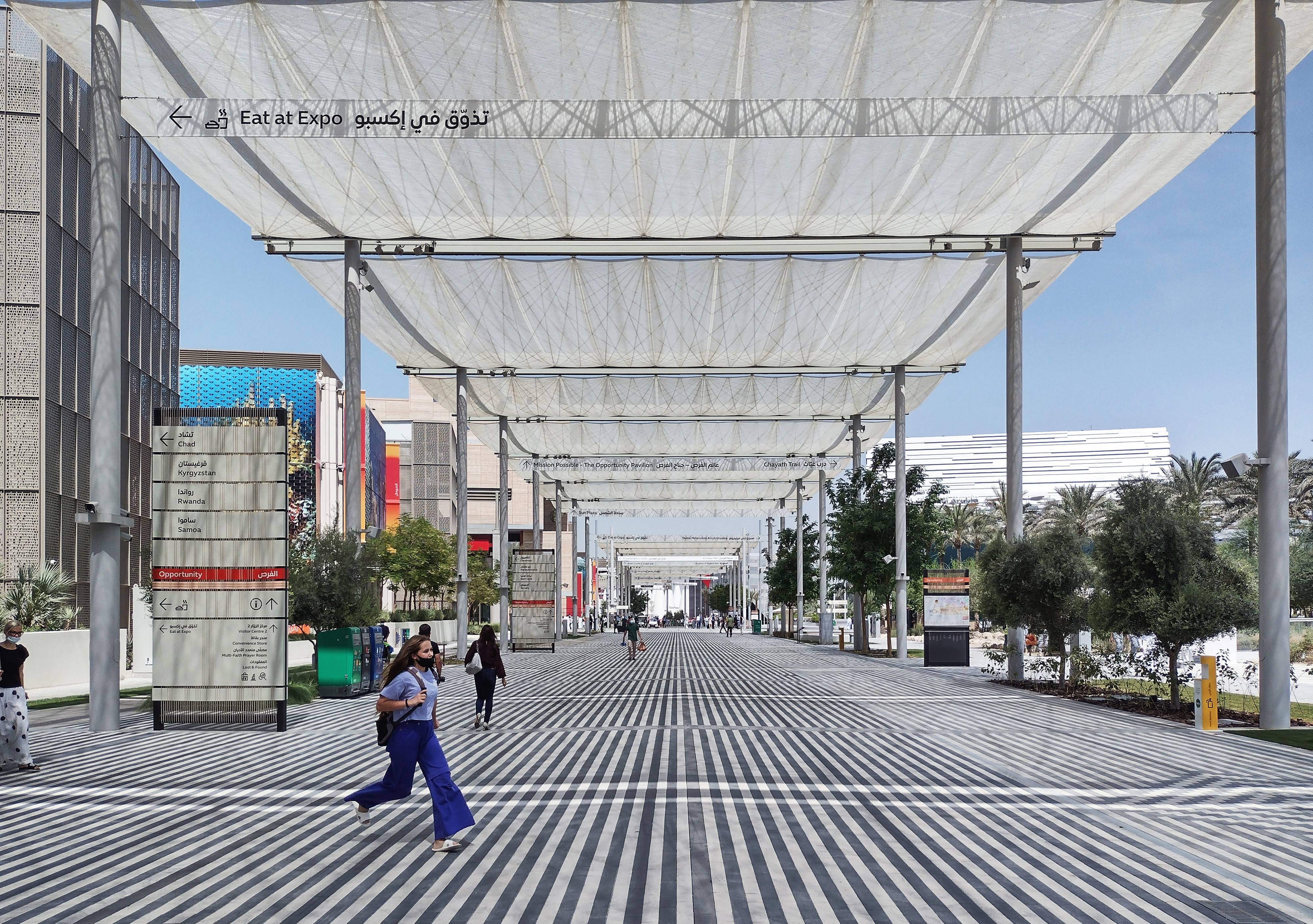
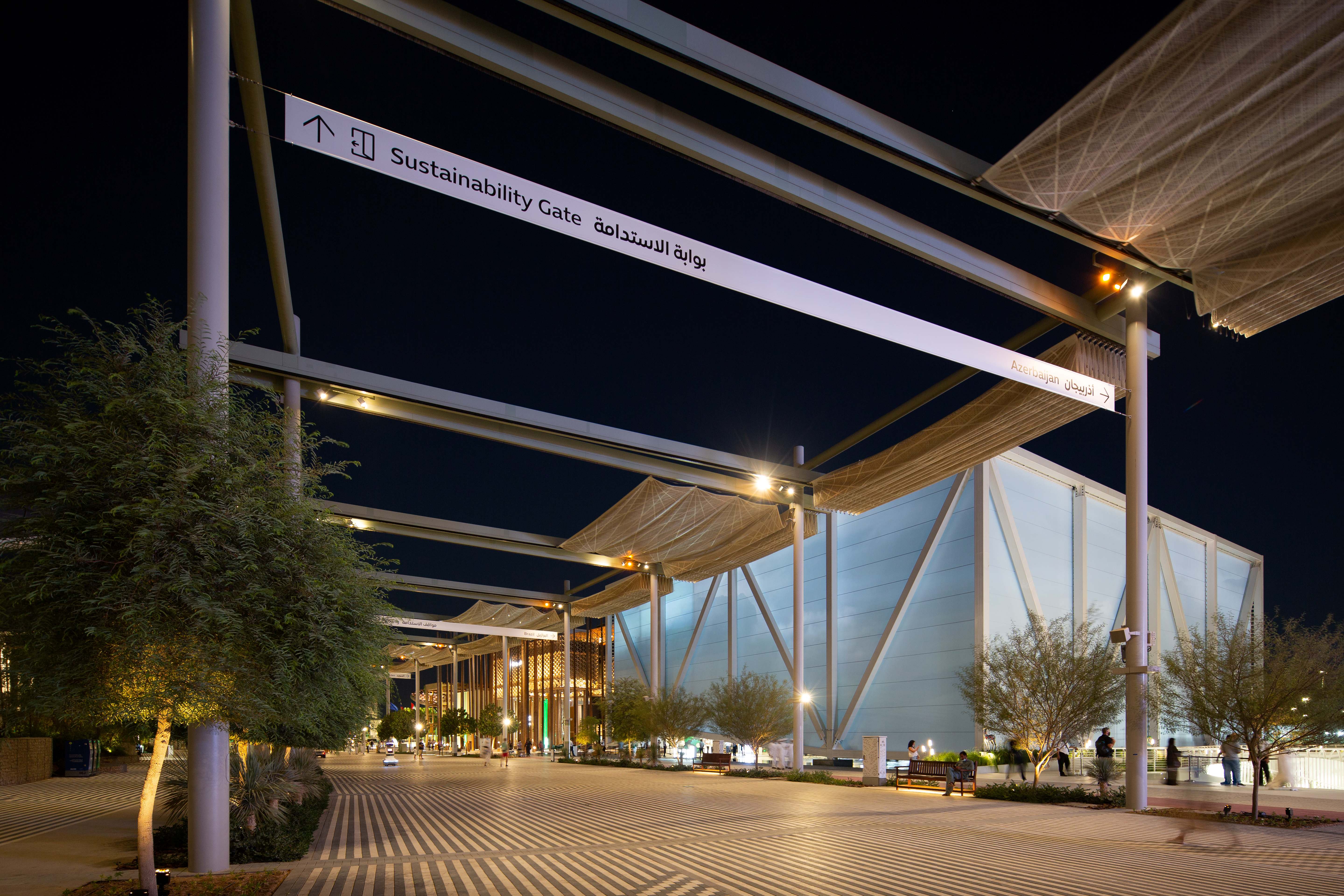
For Expo 2020 Dubai, i-Mesh developed a large-scale architectural textile shading system designed by Werner Sobek to provide environmental comfort and solar protection along the three thematic districts of the Promenade.
Covering more than 54,000 square meters, the project represents one of the largest examples of textile architecture applied to public spaces within a context of high climatic and functional complexity.
The intervention combines lightweight high-performance materials, custom-engineered design and integration with existing architectural systems, contributing to the creation of a more livable urban environment even under extreme environmental conditions.
The project demonstrates how contemporary architectural mesh systems can operate simultaneously as environmental infrastructure, spatial device and architectural identity.
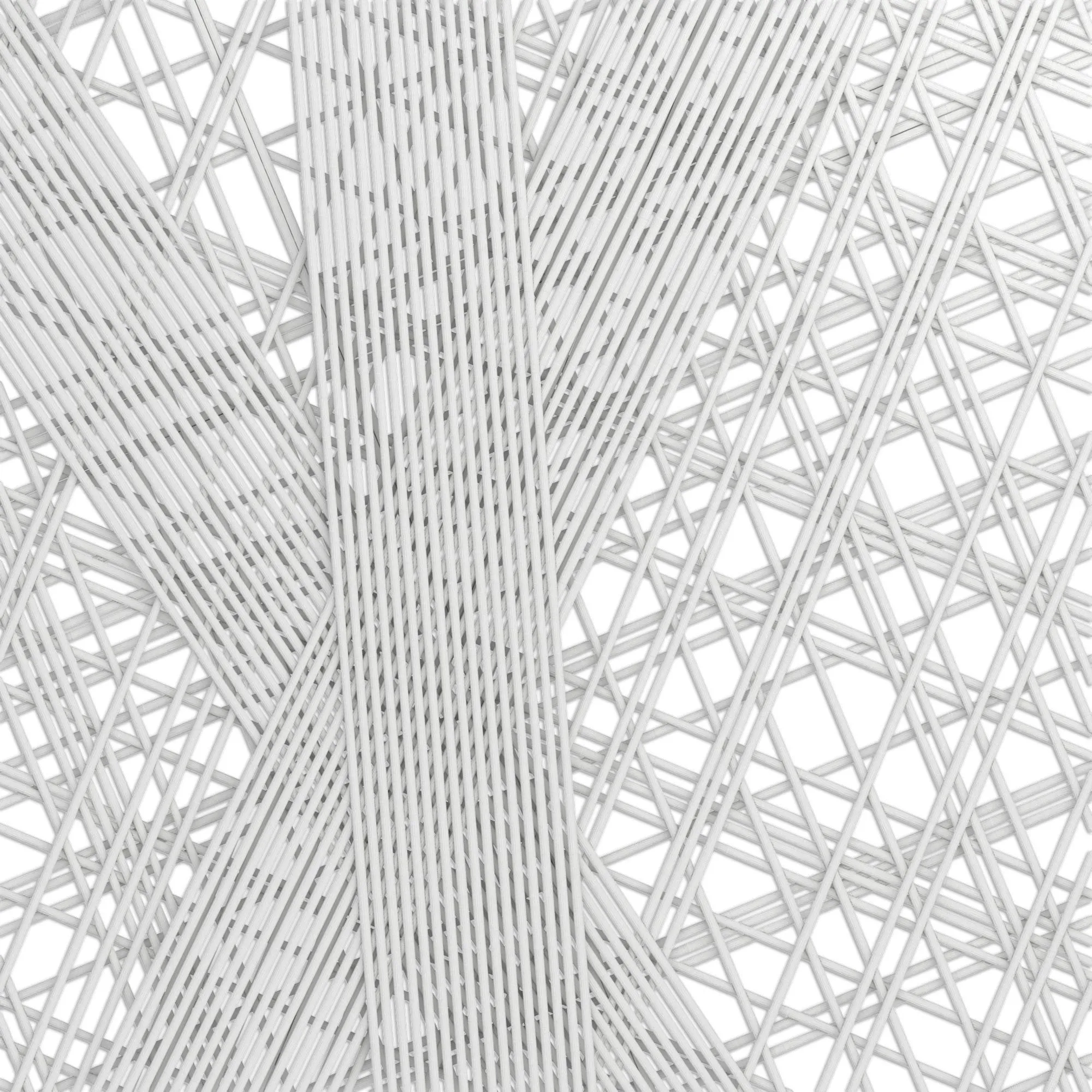
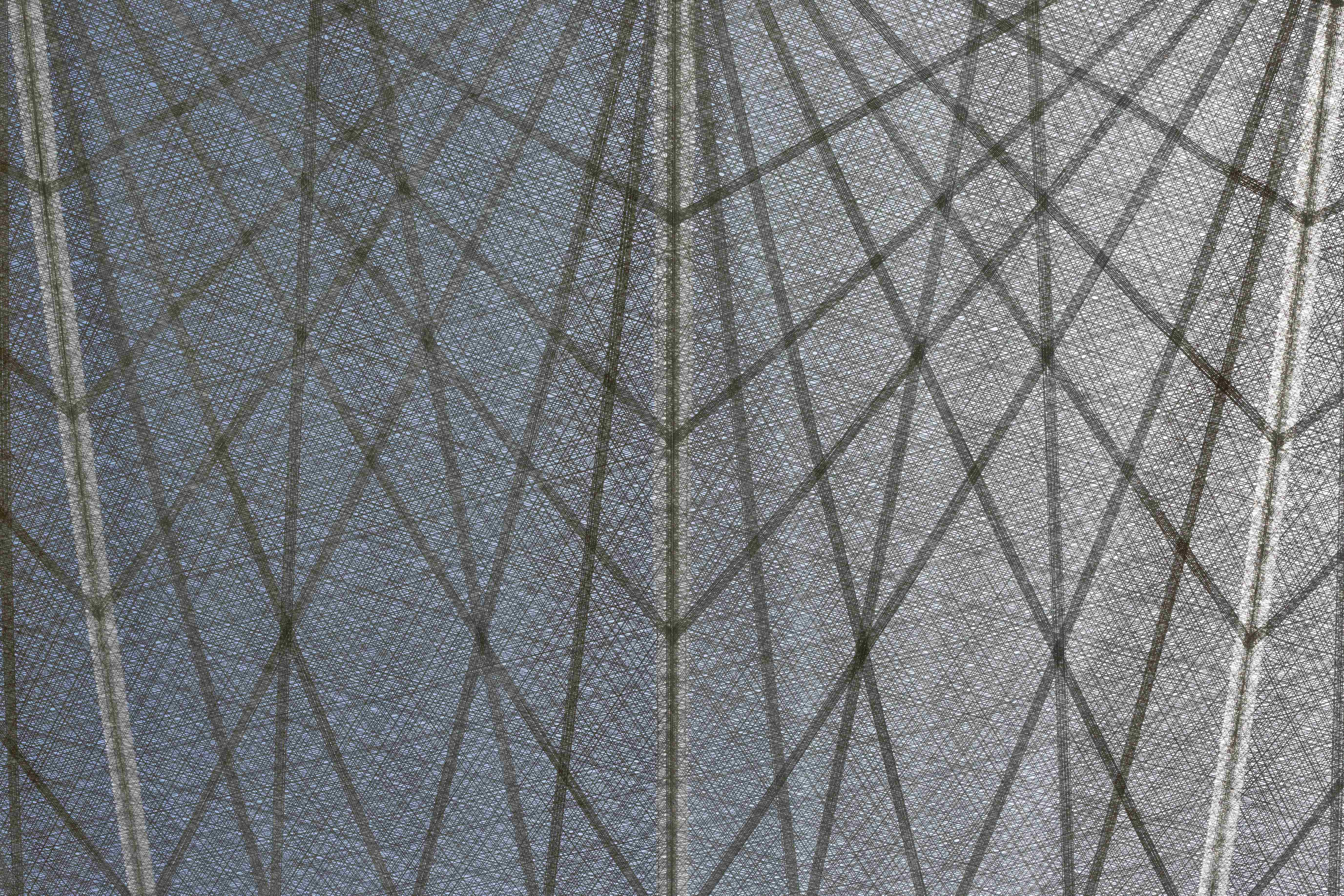
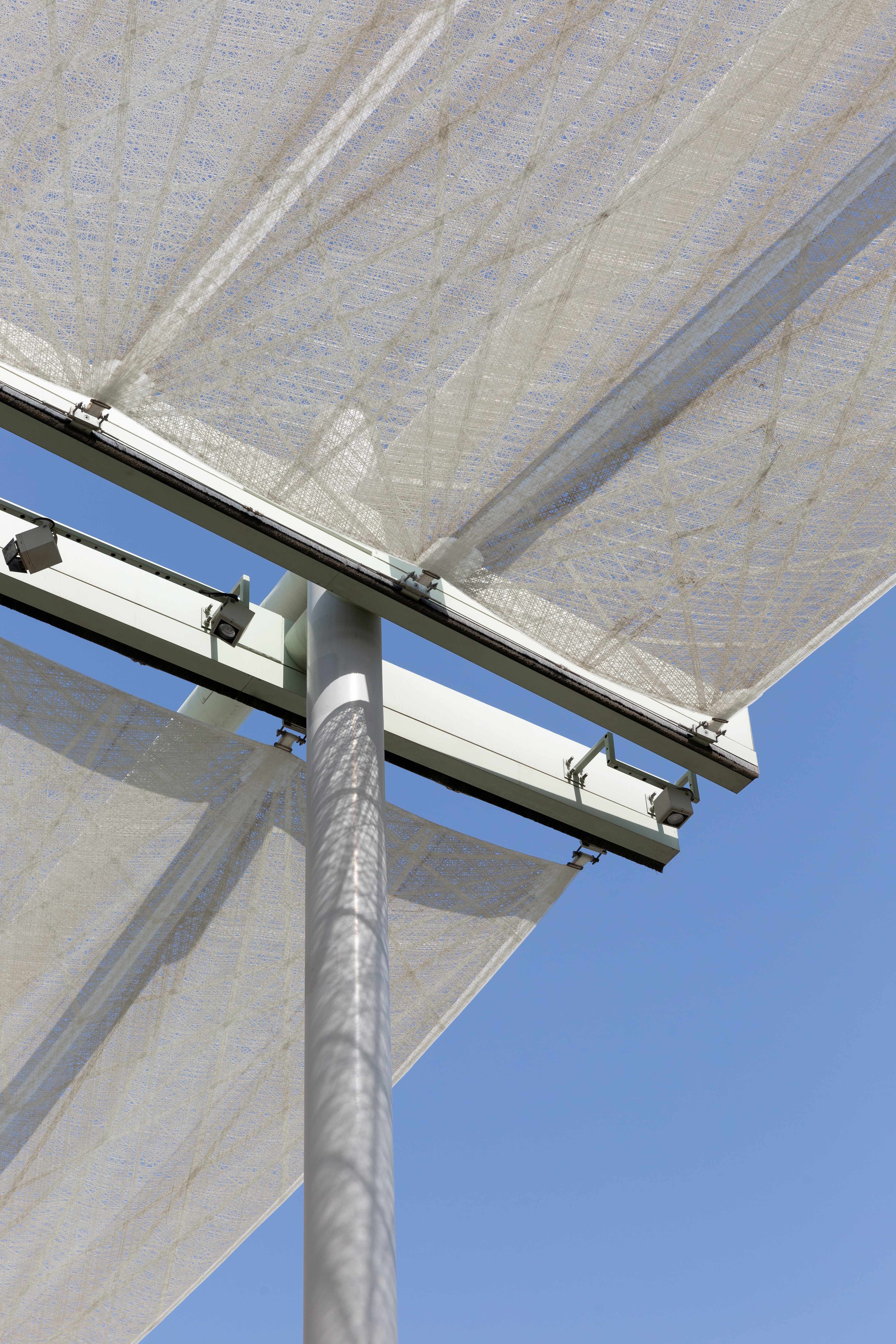
One of the defining aspects of the project is the pattern design of the textile surface, conceived not only as an aesthetic or performance-driven choice, but as a device capable of connecting technology and culture.
The weave developed for the i-Mesh system was designed in dialogue with the geographical and cultural context of Dubai and the Expo 2020 site. The purpose was not simply to create a technical surface for solar shading, but to build an architectural sign capable of interpreting the place through the language of textile materiality.
The pattern therefore becomes a narrative element: a surface translating, in an abstract and contemporary way, cultural references connected to the Middle Eastern context, light, the perception of void and the relationship between shadow and space.
Rather than functioning as decoration, the geometry of the textile surface contributes to the identity of the architectural intervention itself. The visual rhythm of the mesh changes according to light intensity, viewing angle and environmental conditions, generating a continuously evolving perception throughout the day.
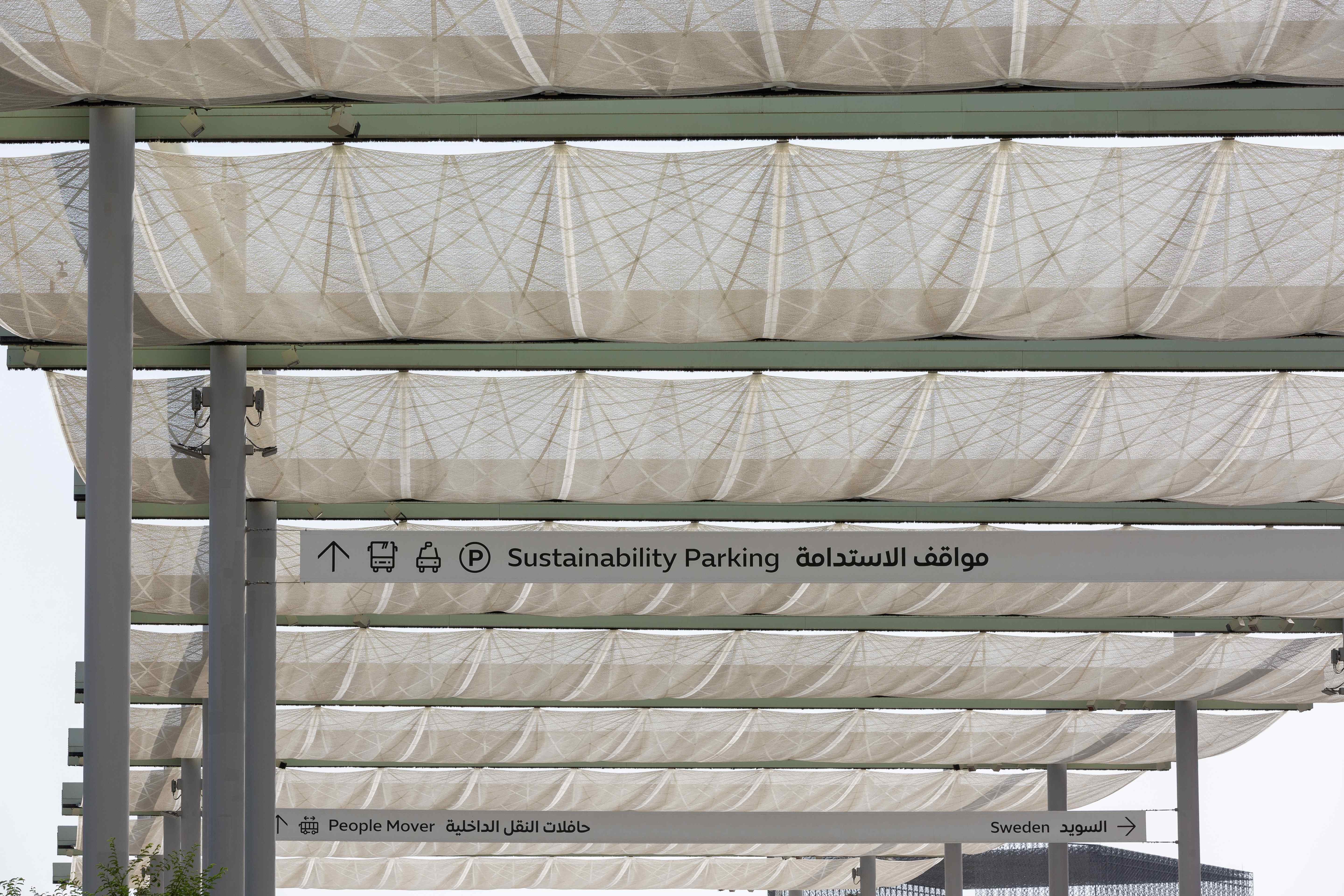
The system extends across the Sustainability, Mobility and Opportunity districts, forming a continuous textile shading structure along the Promenade.
Rather than functioning as a simple canopy, the intervention acts as a breathable architectural skin capable of modulating solar radiation while maintaining visual permeability and natural ventilation.
Light is filtered, never completely blocked. This allows a continuous relationship between built space and the surrounding environment, avoiding the sense of enclosure typical of more rigid systems.
At the same time, the system contributes to a 3% reduction in perceived temperature, improving user comfort and increasing the usability of outdoor public spaces throughout the day.
In this sense, the textile surface acts not only as a technical solution, but as an environmental device operating continuously within the architectural space.
One of the key aspects of the project is the integration of a retractable textile system designed to adapt to changing climatic conditions and operational requirements.
The possibility of opening and closing large textile surfaces allows the architectural envelope to respond in real time to solar exposure, events and maintenance needs.
This flexibility introduces a new approach to façade design. The envelope is no longer static, but becomes a dynamic element capable of interacting with both climate and public activity.
The result is a system that does not simply protect but actively participates in the management and transformation of space over time.
Every component of the system was developed as a custom architectural mesh solution calibrated according to the specific geometric and performance requirements of the project.
The complexity of the intervention required an integrated process in which parametric design, engineering and production operated in close coordination.
The material was not applied afterward as a secondary layer, but conceived from the earliest stages as an integral part of the architectural design.
This approach made it possible to optimize the relationship between form, function and performance while ensuring both construction precision and aesthetic quality.
i-Mesh becomes an active architectural element capable of translating design requirements into a scalable and adaptable solution.
Intervening on a surface of this scale required materials capable of combining structural lightness, resistance and durability.
The textile system developed for Expo Dubai responds to these needs by offering high solar-shading performance and environmental efficiency without overloading the supporting structures.
The reduction of structural loads allows large spans to be covered with minimal impact, simplifying integration with existing infrastructures and reducing construction complexity.
At the same time, the material contributes to passive cooling strategies by limiting heat gain and improving the overall environmental performance of the public space.
This balance between lightness and performance represents one of the defining characteristics of contemporary textile architecture.
Beyond its technical function, the system directly affects the quality of public space.
In a climate such as Dubai’s, characterized by high temperatures and intense solar radiation, the creation of shaded and ventilated areas becomes essential to ensure the usability of outdoor environments.
The textile surface acts as a filter, regulating light and heat without interrupting visual and spatial continuity.
This approach allows an open relationship with the environment, avoiding completely enclosed or fully air-conditioned solutions.
A new way of designing public space emerges, where comfort is achieved not by isolating the environment, but by modulating climatic conditions.
Architecture becomes an interface between body and climate.
The project developed for Expo 2020 Dubai represents a significant application of large-scale textile architecture systems.
Working within such a complex international context required the integration of design, engineering and manufacturing within a highly coordinated process.
The result demonstrates how textile façades and advanced shading systems can respond effectively and flexibly to technical, environmental and architectural requirements.
At the same time, the project highlights the growing role of lightweight and adaptive materials in contemporary architecture.
The objective is no longer simply to cover or protect, but to build a more articulated relationship between space, climate and human experience.
Request a consultation for large-scale shading systems