- en

Etymologically, the concept has remained unchanged for millennia, yet over time and throughout history, the word has assumed different connotations, sometimes at opposite ends of the spectrum—from exodus to the frontier, whether physical, ethical, spiritual, or cultural. Migrating, migrant, migration—all are variations stemming from the same root, connected to the grand processes of knowledge, and to the horizontal dimension of coexistence. These processes admit no shortcuts or vertical simplifications; rather, they require the ability to grasp the complexity of connections and relationships.
A useful example: in digital narratives, digital migrants are contrasted with digital natives, in an exchange where knowledge models become a comparison of worldviews. More broadly, however, the term migration encompasses the full spectrum of Living within Creation.
Species migrate across land, water, and sky; birds migrate in their flights, creating patterns that challenge parametric architecture; fish migrate, blending seas into ecosystems of native and alien species; animals migrate, leaving the habitats documented in zoological manuals in search of new lands. Botanical research shows that plants and trees move, change orientation and posture, adapt, and navigate their context through roots and canopies. Human cells migrate, as medicine, neuroscience, and biology show—seeking healing or succumbing to disease.
These innate behaviors underpin developmental processes and are fundamental to survival. The subject is captivating, multicultural, and transdisciplinary; it interrogates individual and collective dimensions, the formation and dissolution of communities, and the relationship between individuals and members of their species, as well as internal group dynamics that define structure, competition, and cooperation. Life, in its essence, moves, changes state, posture, and position; it experiments, learns, and evolves. This is the common thread in all migration, the pursuit of new freedom, the gaze toward an open horizon, toward a better perspective. Migration is intrinsic to human history, anthropological before it is phenomenological.
From a geopolitical perspective, International Migrants Day, observed annually on December 18, provides a concrete illustration. Established in 2000 by the United Nations General Assembly to raise awareness of migration issues, it promotes the rights of migrants, refugees, and their families, encouraging integration, solidarity, and awareness of the challenges posed by global migration flows. Since 2015, migrations have assumed epochal dimensions, at times resembling exoduses driven by wars, access to scarce resources, bloody ethnic conflicts, or climate crises rendering large areas of the planet uninhabitable, as well as by the legitimate desire for improved well-being and living conditions. Migrations thus encompass a vast array of historical, cultural, political, and socio-economic motivations.
In recent years, various forms of insecurity and domination have caused significant forced displacements, both within and across national borders. Yet, regardless of the reasons behind their movement, migrants and displaced persons remain among society’s most vulnerable and marginalized groups, exposed to abuse, exploitation, deprivation, limited access to essential services, including healthcare, and victims of xenophobic attacks and stigma fueled by misinformation. For over a decade, inconsistent governance has failed to address the critical issue of safe and regular migration pathways, exacerbating inhumane criminal practices and prompting millions to undertake perilous journeys each year.
Nonetheless, socio-economic analyses confirm that migrants contribute significantly to prosperity, innovation, and sustainable development in countries of origin, transit, and destination. Remittances support families and stimulate local markets, particularly in low- and middle-income countries, fostering virtuous forms of development and empowerment. Amidst adversity, inspiring life stories emerge—talented individuals overcoming challenges and enriching destination communities, as the cognitive stock of human capital generated by contemporary mobility remains among the most valuable resources. For these reasons, which are first cultural and then political, reinforcing and valuing safe migration and a mature culture of hospitality represents a collective effort and a long-term vision. Numerous institutions and NGOs are implementing policies that combine rights and access to foster integration and development. Examples include the Global Compact for Safe, Orderly and Regular Migration (GCM), providing guidance for managing human mobility and harnessing its opportunities, and UNICRI, in collaboration with John Cabot University (JCU), which organizes the Summer School on Migration and Human Rights, dedicated to international migration.

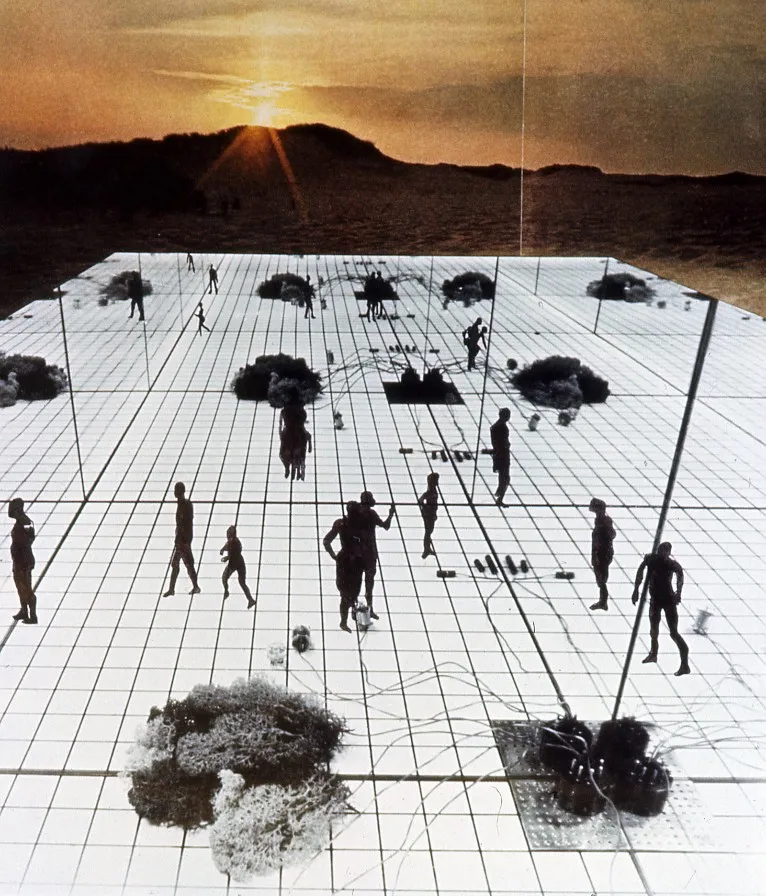
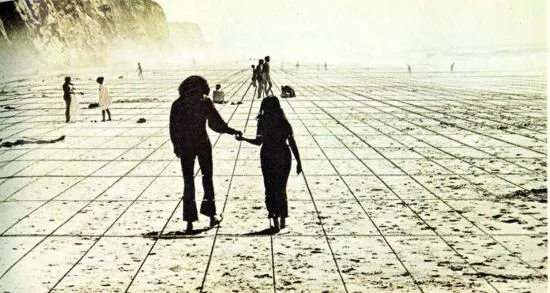
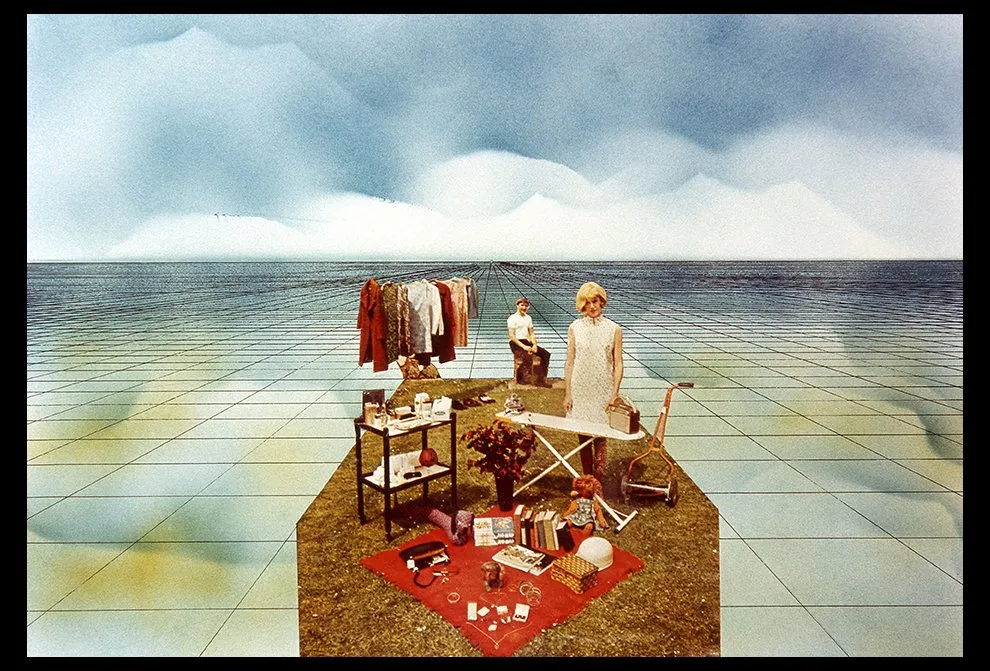
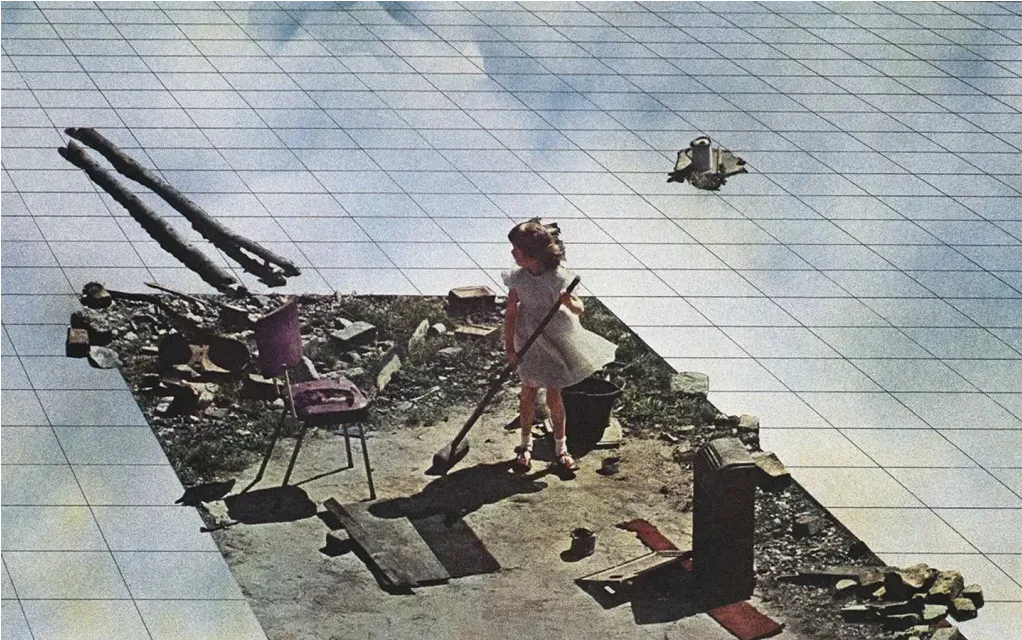
With foresight, utopian vision, and a genuinely democratic perspective, between the mid-1960s and 1970s, Superstudio developed insights that would mark an era. The Florence-born group of architects—Cristiano Toraldo di Francia, Adolfo Natalini, and Piero Frassinelli—a neo-radical avant-garde, began by critiquing modernity to instead assert the idea of a world and a time without physical barriers, walls of separation, or protection. It was a metaphor for an open, inclusive, and transparent society (link al video di Toraldo) composed of multiple, mutable, and inclusive identities.
For this “time without barriers,” Superstudio envisioned moving from the continuous monument of a homogenized and globalized Earth to a networked fabric—understood in a broad sense—as an open and permeable work, allowing imagination and paths to flow freely. This reflected a nomadic civilization, lifestyle and knowledge emblematic of soft power for people, knowledge, and relationships. It was architecture speaking, ultimately, about the human condition.
If these insights represented avant-garde foresight, it is certain that cognitive communities—by nature and structure—draw upon movement, conceptual, operational, and projectual migration as essential for their existence and development. It is difficult to imagine high-quality output from closed, hostile communities or from impermeable human capital to global cultures and experiences. Innovative projects rely on the fusion of disciplines, aesthetics, poetics, materials, and traditions, combined with mobility and access, offering experiences, resources, and raw material for doing and being.
Migrations, governed by law, therefore preserve infinite stories of value and value stories of human and professional success, life, and knowledge that feed and connect global energies, cultural and projectual exchange, and the renewal of human perspective. Even today, that prophetic vision of Superstudio stands as a challenge and a call to action. Irreducible. Invaluable.