- en


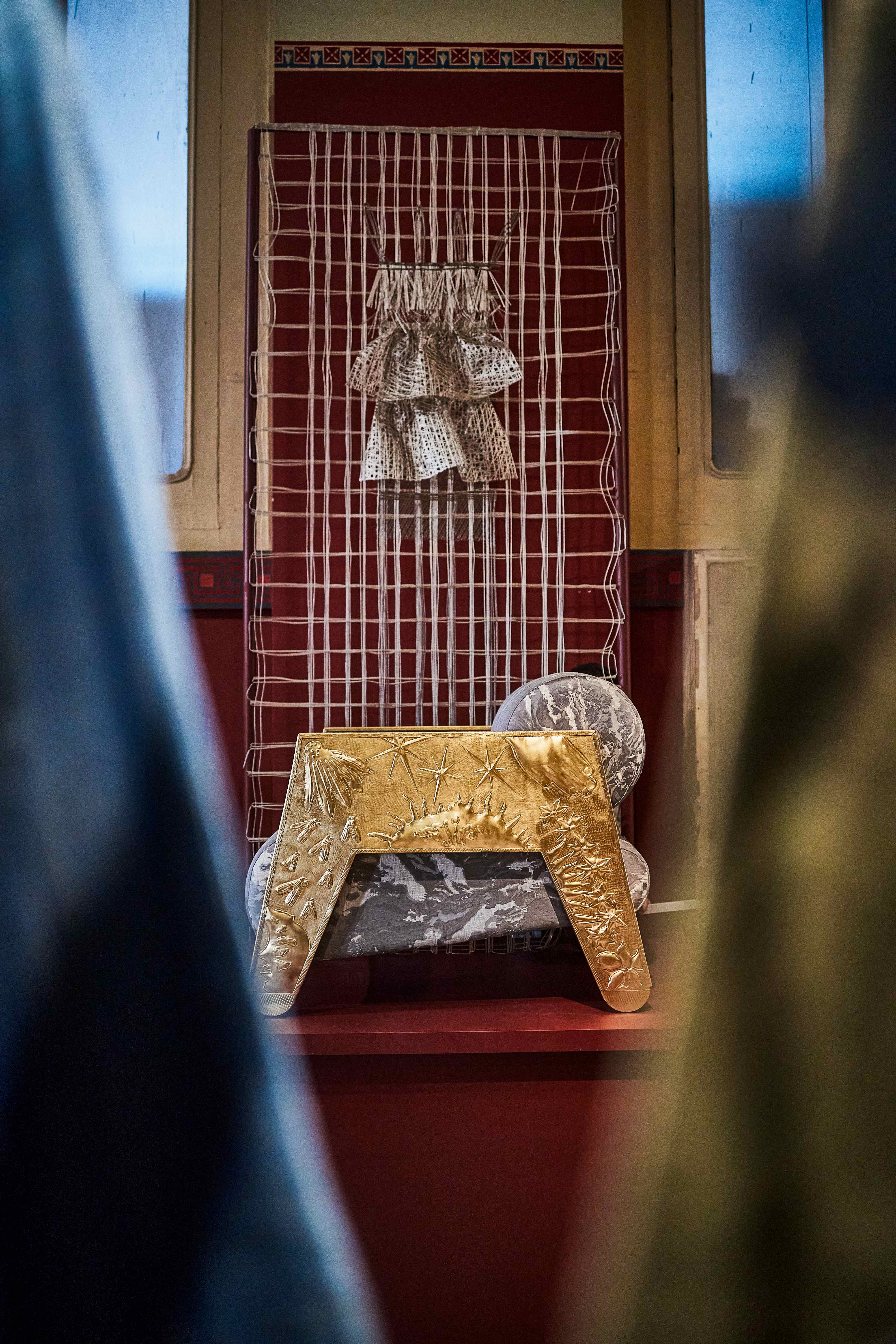
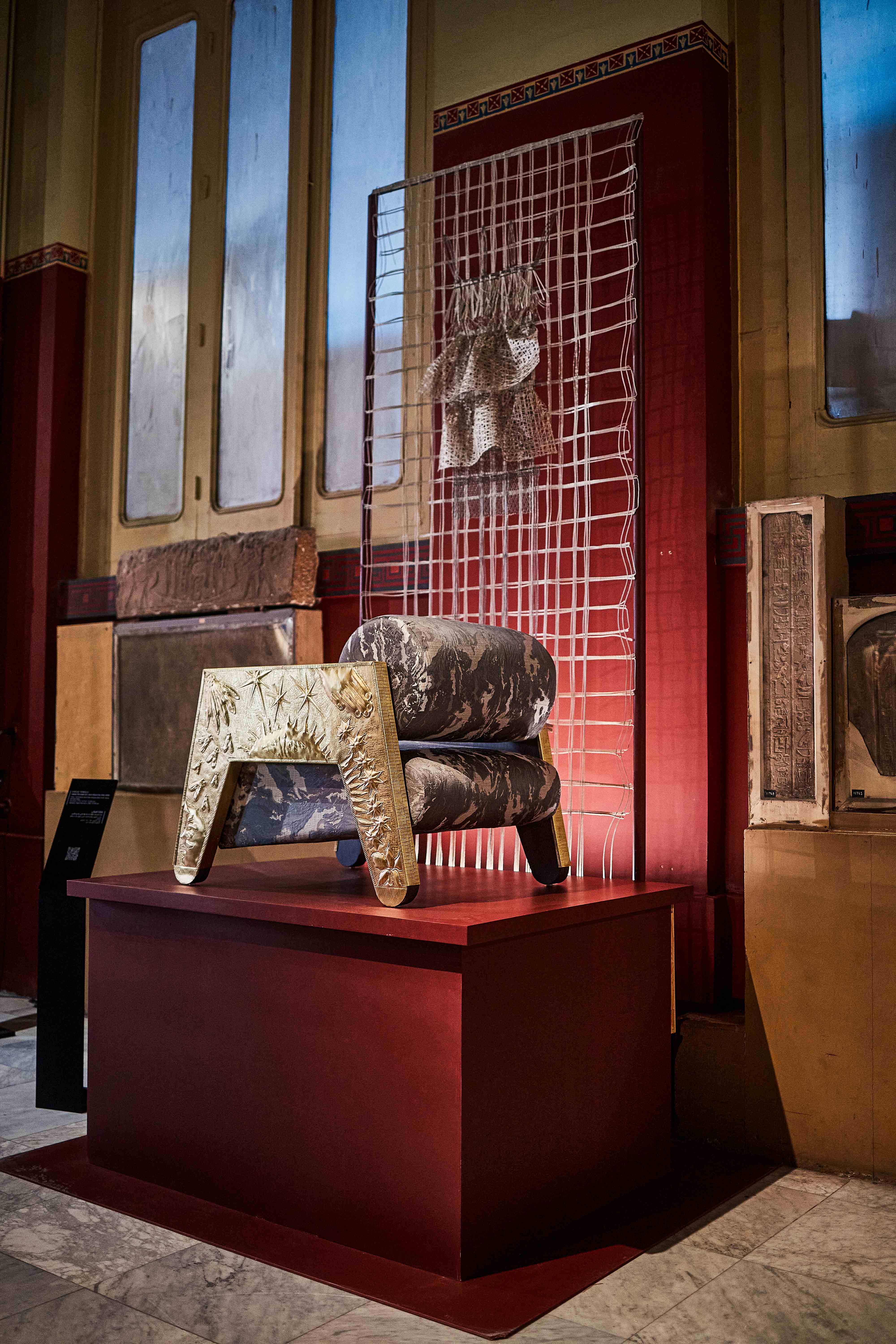
In Giulia Tubelli’s project Under the Same Sky, presented at the Egyptian Museum in Cairo within the exhibition Formed by Dialogue, ancient cosmologies resurface through the contemporary language of i-Mesh.
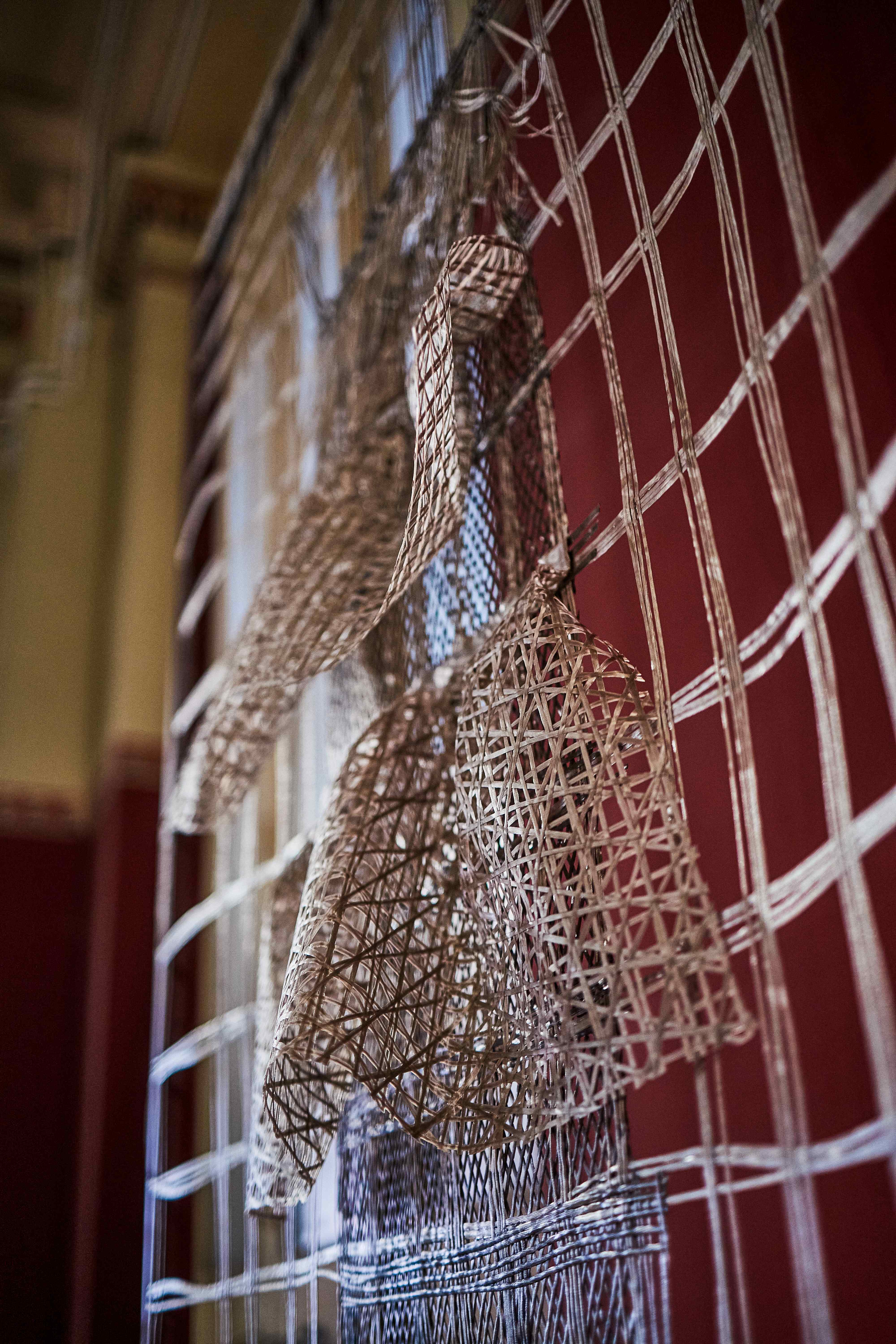
Her i-Mesh tapestries move between art, archaeology and architecture, turning the weave into a place of meaning, a bridge suspended between cultures, between material and myth. A collaboration shaped by shared imaginations and by the ability of materials to carry stories across borders and time.
Tubelli’s cross-cultural vision, grounded in years of work between Milan, Berlin, and Cairo, finds in i-Mesh a material capable of expressing dual identities: the humanistic legacy of Italian design and the vibrant craftsmanship of Egypt. A collaboration that becomes more than an exhibition: it is an act of encounter, an invitation to recognize how creativity can unite worlds under the same sky.
Pedj-shes means stretching the cord, the practice of rope stretching used in ancient Egypt to determin buildings’ dimensions and align structures to astronomic or geographic features,while fixing the ground plan and determining the position of its corners. It was a highly ritualized moment, which saw the pharaohs themselves, and other high-ranking officials, stretch the cord when new sacred buildings were planned. Overseeing it was Seshat — Goddess of Measurement,
Writing, and Architecture; the goddess of knowledge and the foundation of temples. She was the one who drew the perimeter of the new sacred buildings, together with the pharaoh. Her worship most probably preceeded the First Dinasty of Egypt and the invention of writing, and lasted into the Ptolemaic kingdom, 3000 years later.
From this ritual the sacred proportions of Egyptian architecture originated, and the rope and triangle tools used in it influenced the development of geometry and mathematics . In a similar way, the technique used to manufacture this tapestries stretches the threads before joining them together, echoing the idea of measured and deliberate construction.
The measured iconography of Sheshat and the deities of Egyptian reliefes, which fused architectural language with ornamentation and the representation of divinity, expressing the sacredness of spaces, is translated into a new textile language. Divine figures, with human proportions but monumental in scale, occupied the vertical surfaces of the building, imparting rhythm and narrative to the façade itself.
This work, as an exploration of the theme, reestablishes a connection between architecture and ornamentation in a contemporary key: instead of carved stone, a contemporary façade material is used, while preserving the ancient proportions feet, legs, torso, head, or foundation, vertical development, and crowning element. A reconstructing of that symbolic and decorative link of
architecture, reinterpreted in the present.
i-Mesh transforms archaeology into contemporary architectural language. Light filters between champagne, silver, and bronze filaments, revealing a rhythm that is both monumental and weightless, a façade translated into fiber. A tapestry that becomes architecture, where artisanal gesture and high-performance material merge into a single surface; through the i-Mesh filament, the sacred scale of ancient Egyptian architecture finds a new language — suspended between memory and innovation, between sculptural silence and tactile light.